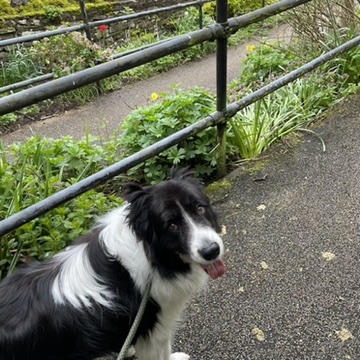
I have now taken my charge out for a walk, an unsuccessful attempt to take a Sunday walk at a nearby waterfall (it’s a long weekend holiday here, so the place was packed), Sunday roast at the local pub and a short nap. The sister was also taken for those things. Pics ahead. Anyway, ready to take you back for more of Wales now!
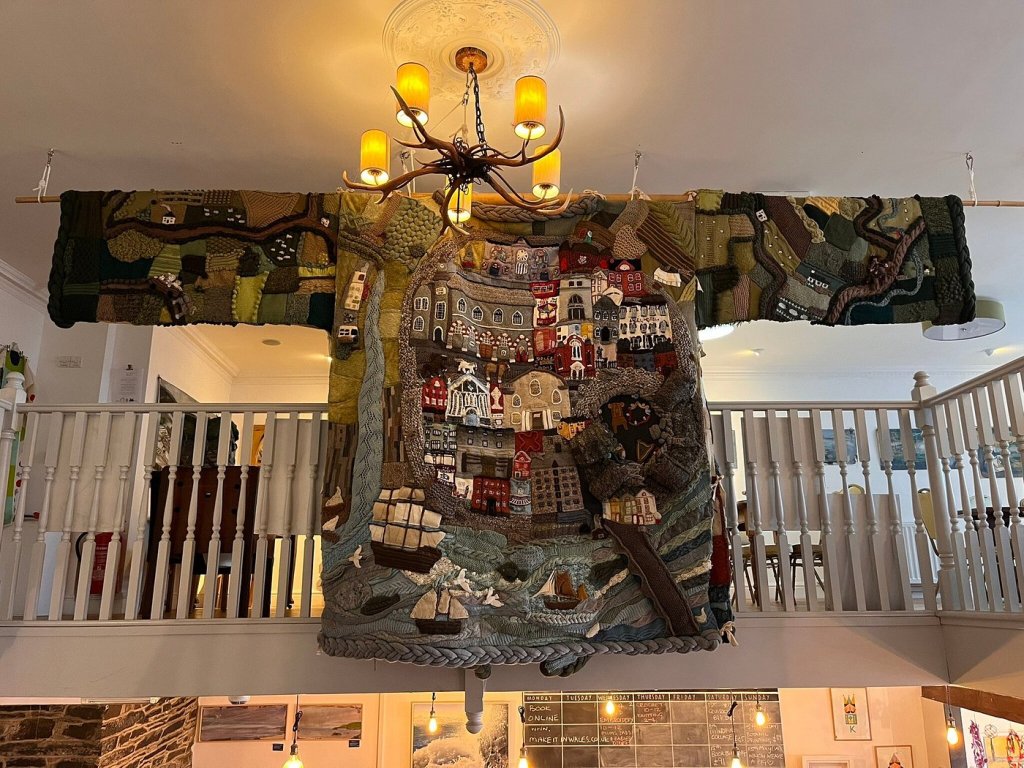
Oh my goodness, I just realized I lost a day there in my descriptions. When we first arrived at Druidstone, we immediately went into two hands-on workshops — one in weaving and one in wet felting. While that was going on, Colleen and I were wandering around the property, taking people’s luggage to their rooms and checking on things. Then I sat down to work for a while. The next morning, after breakfast, we actually continued with the second part of the workshops — and I worked again on my computer. So… I didn’t take any pictures of the group involved in their making adventures. I was also stressed out by some pieces of upcoming tours that were not coming together well and/or had to be changed altogether. (Surprise! The venue for your workshop the teacher was supposed to arrange has now announced they won’t be open! Find somewhere new, rearrange schedule on that day and next two days in order to make it all work! Ta da! Magic!) I think my head was still swimming in logistics when we drove north from Druidstone, on the Pembrokeshire coast, to Cardigan to see the giant cardigan (picture below, swiped from the internet) and on to Garthenor Organic.
Garthenor is well-known in the UK wool community — or I should say yarn and crafting community — for being the first to create and offer “organic yarn”. That means from sheep to shelf, everything involved with the making of their yarn and wool products is 100% organic: all pasture and all auxiliary feed, the highest standards for animal husbandry, scouring and dyeing of the wool, etc etc etc. It’s a remarkable accomplishment. The owners of Garthenor, Sally Davies and her son Jonny, met us at their new mill in Cardigan. They are now not only raising sheep and gathering good, local wool from regional British breeds, but are also now cleaning, milling (that’s carding, combing and preparing fiber to be spun into yarn, either by handspinners or by spinning machines), dyeing and packaging up hundreds of pounds of wool every year. They pay sheep farmers about double what the British Wool Board pays for wool — sometimes more. That’s because the folks at Garthenor know the true worth of good wool. They also have strict standards that sheep keepers must meet — but make it well worth the farmers’ efforts to do so. In fact, in a country where most sheep are kept for meat production, Garthenor and other small wool businesses are FINALLY starting to have an impact on the agricultural zeitgeist. It’s no longer beyond belief that someone would raise sheep for their wool rather than for just for their meat. Just ten years ago, most farmers would have laughed if you suggest they raise sheep in order to produce wool. Wool here has been a waste product for generations. What? A waste product? Absolutely. Even now, a farmer pays more to have the wool sheared off a sheep’s body than he can make by selling the fleece. Multiply that loss by the size of a flock and you can see why most farmers think of the wool as a bloody nuisance. Why shear then? Simple answer: we’ve bred a domestic animal that must be sheared at least once a year for health reasons. So even in the modern age, when synthetic textiles are cheaper, more desirable and have caused the price of wool to collapse, farmers must shear their sheep. Only recently, with new types of wool enterprises getting off the ground, can farmers start to get paid a decent amount for the wool they produce. Garthenor is not the first, nor the largest, but by introducing the organic standard, they are among the most transformational of these craft-based businesses that are rejuvenating Britain’s wool industry. Little by little. Fleece by fleece. Farmer by farmer. Bravo, Garthenor. (Check them out here.)
They also make exceptional yarn.
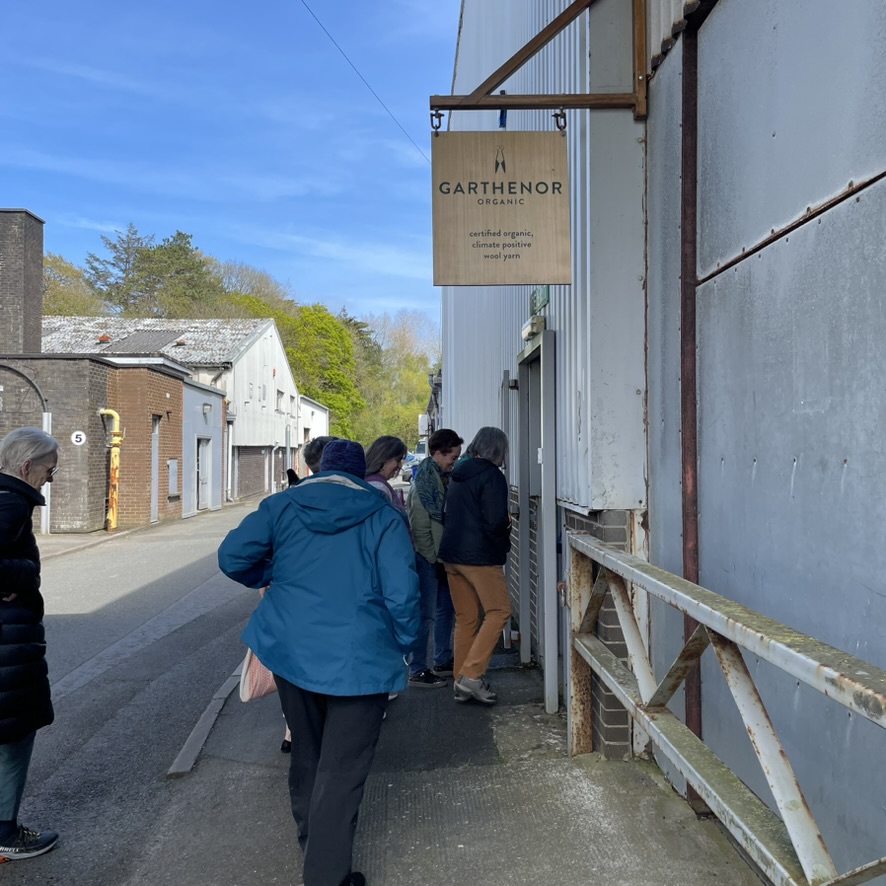
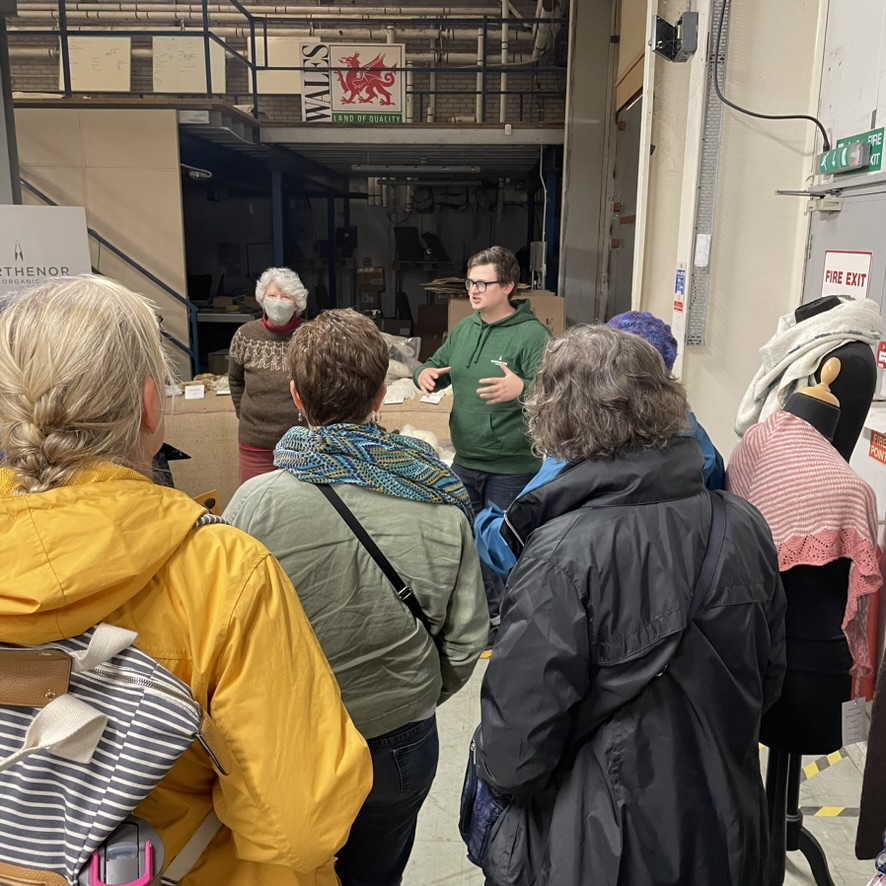
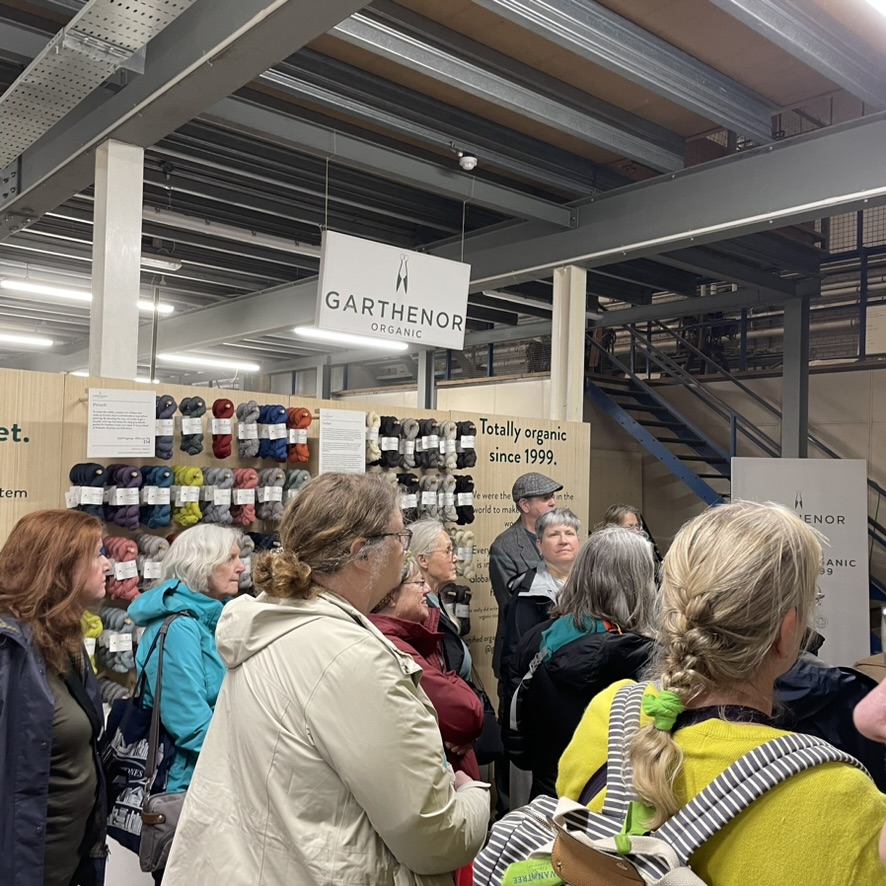
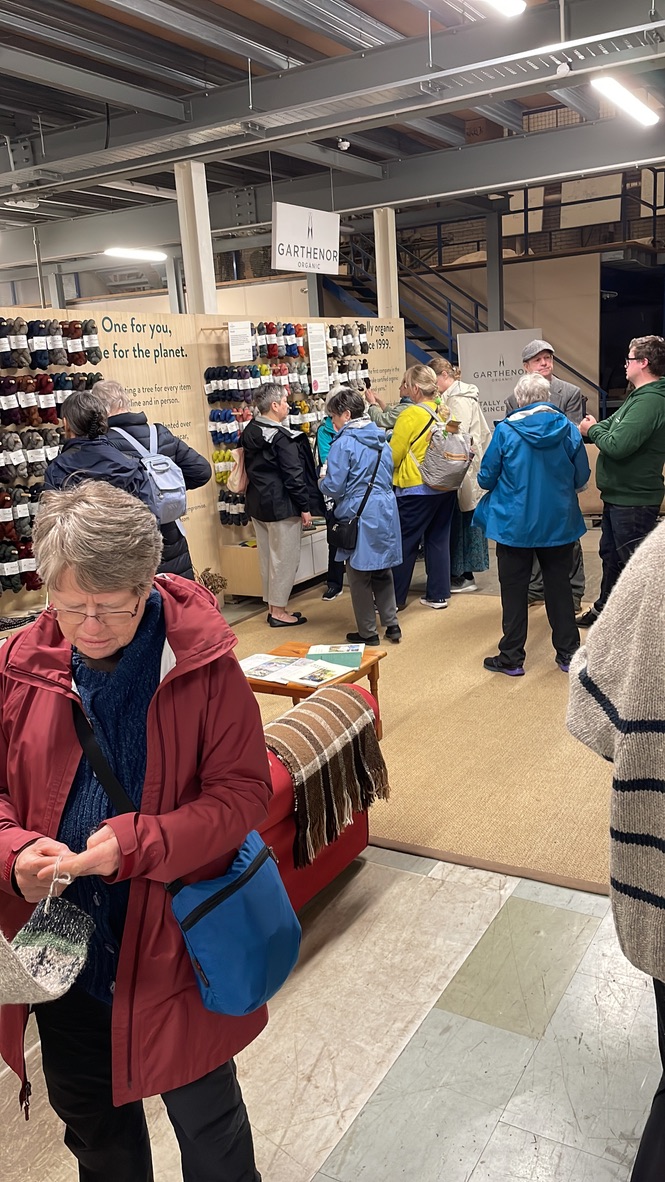
After our yarn buying frenzy, we returned to Druidstone and THEN had the twmpath.
And the next day is when we visited St. David’s Cathedral in the morning, then Melin Tregwynt, a Welsh working woolen mill, in the afternoon. Things were purchased. I cannot say more about that until a certain package reaches the home front…
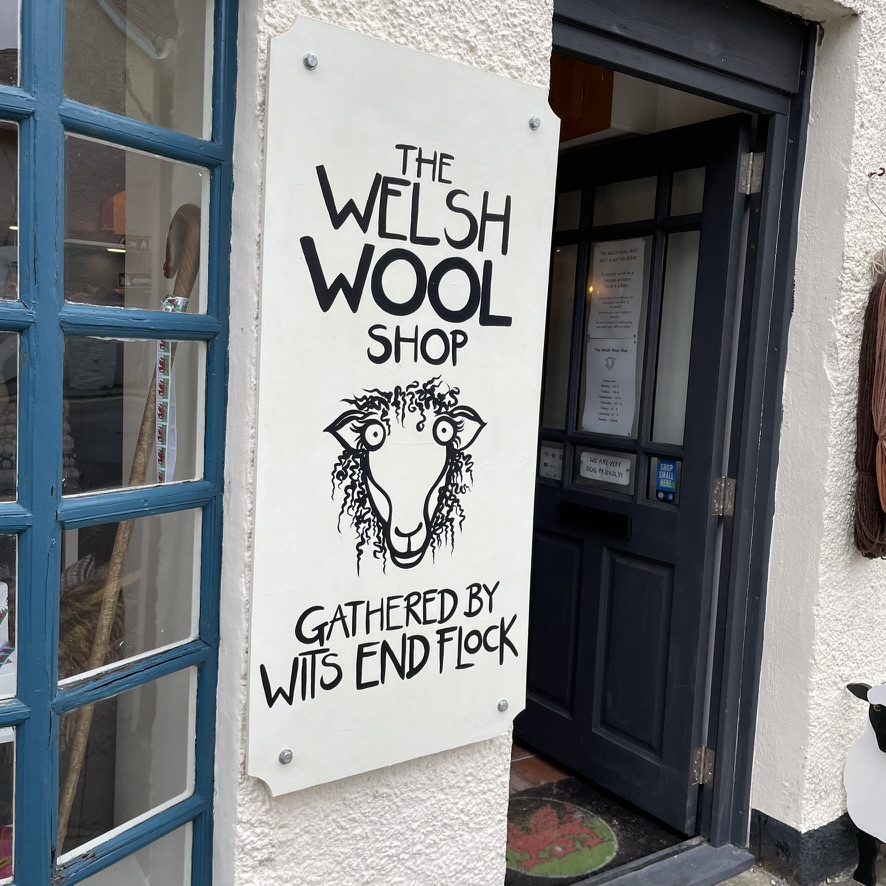
So, it was actually Thursday that we left Druidstone (whew!) and traveled to Newcastle Emlyn to visit the owners of a sweet little place called The Welsh Wool Shop. I know, Newcastle Emlyn is eminently pronounceable. Thus, I give you the names of a few nearby towns, just to keep you on your toes. Try saying Cwm-cou, Llandyfriog and Capel Tygwydd. There you go. Challenging. Anyway, this shop was started by a couple who moved from London to the Welsh countryside because they wanted to farm… somewhere along the way they acquired sheep… then found no one wanted the wool… they started making rugs and other goods from their own wool… then they decided to make their own yarn… then they wondered why there were no Welsh woolen goods in the shops when there are sheep all over the place… (Wales is home to 3 million people and ten million sheep. Really.) and that led to opening a shop featuring all-things-local-and-woolly. A sweet little place, for sure.
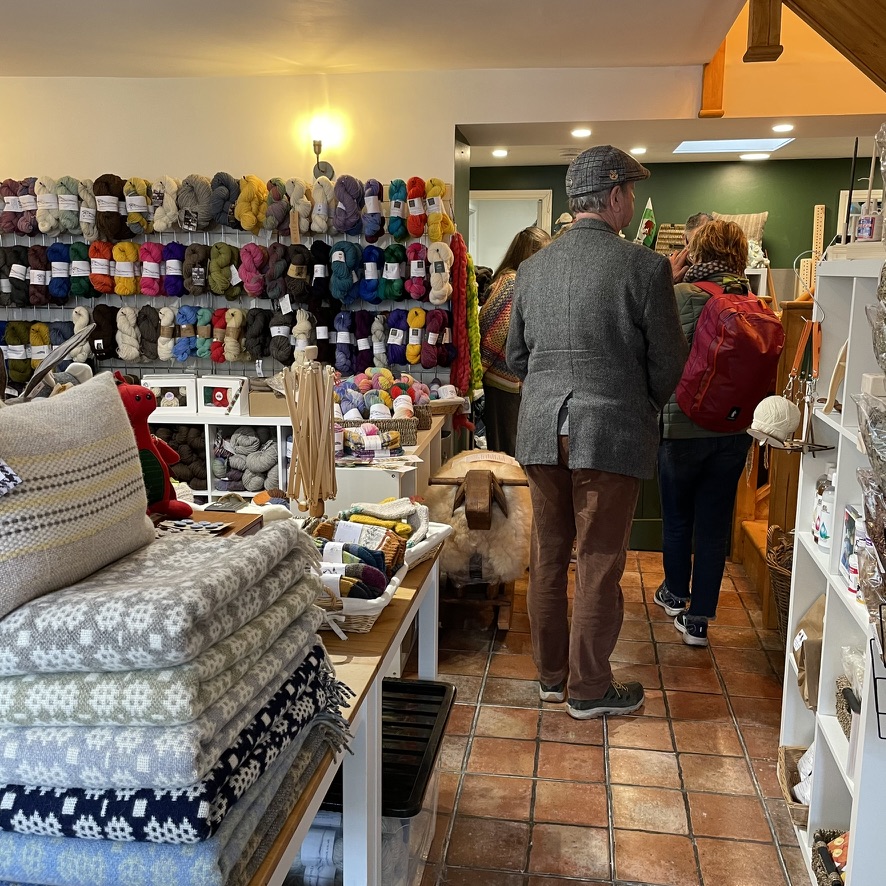
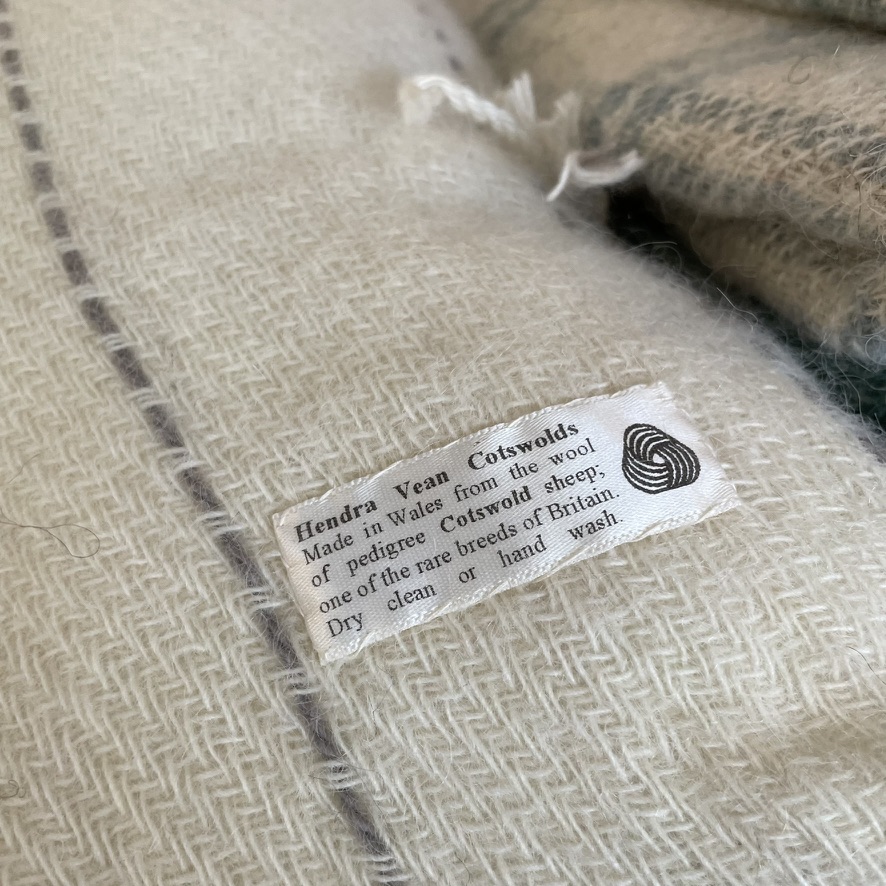
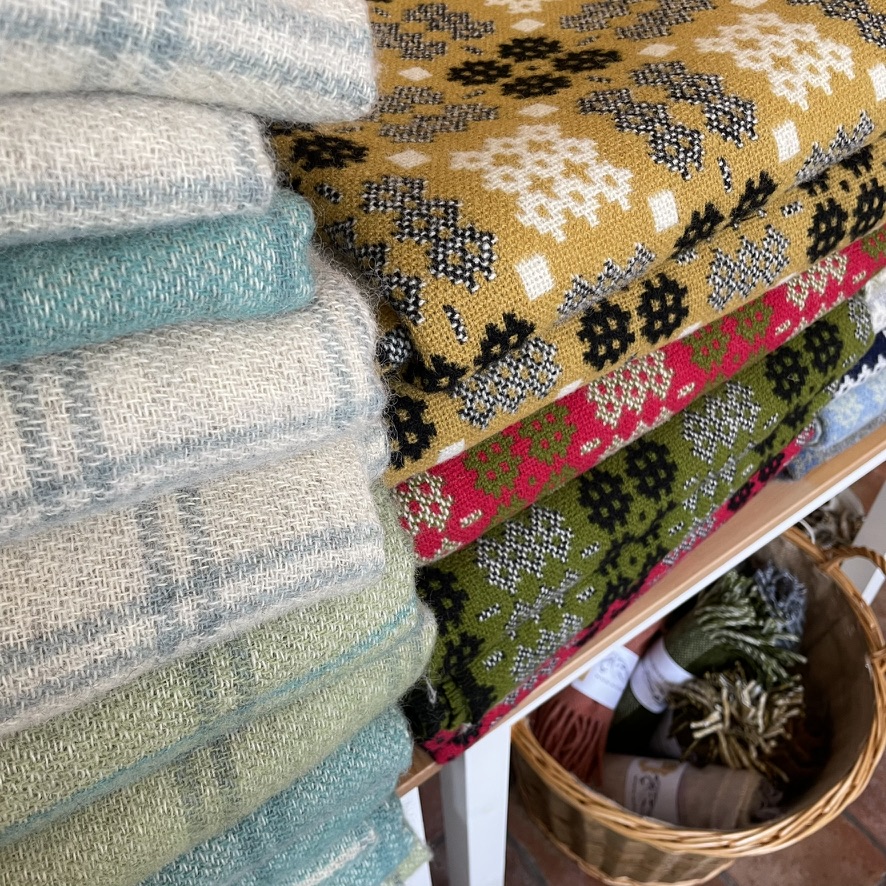
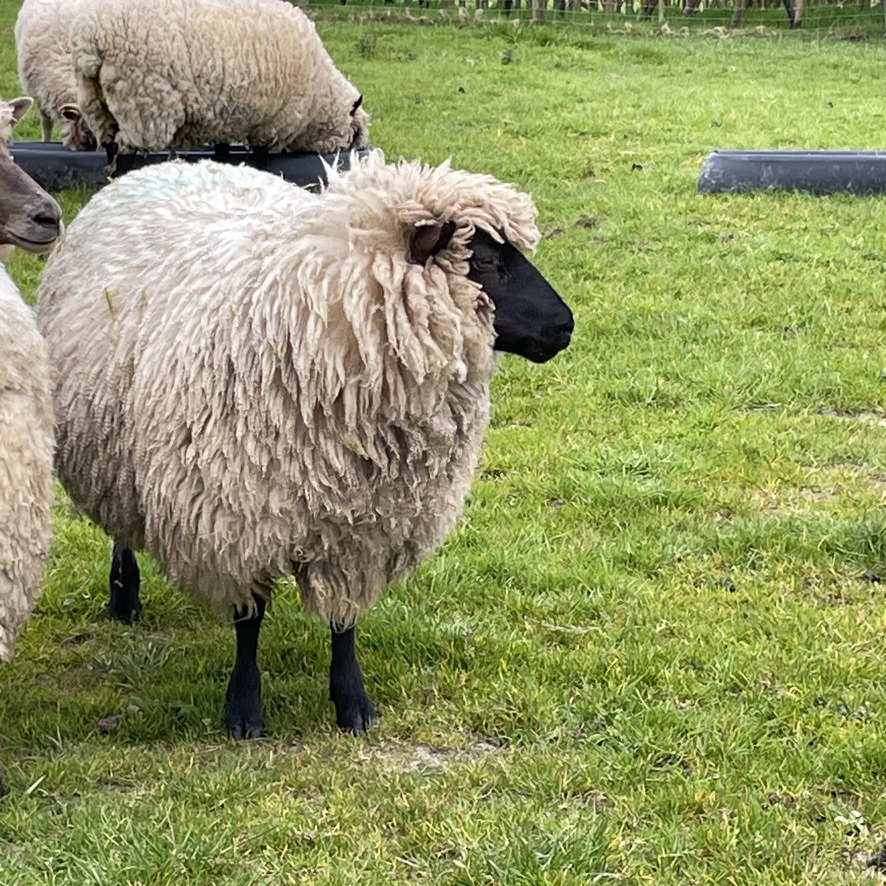
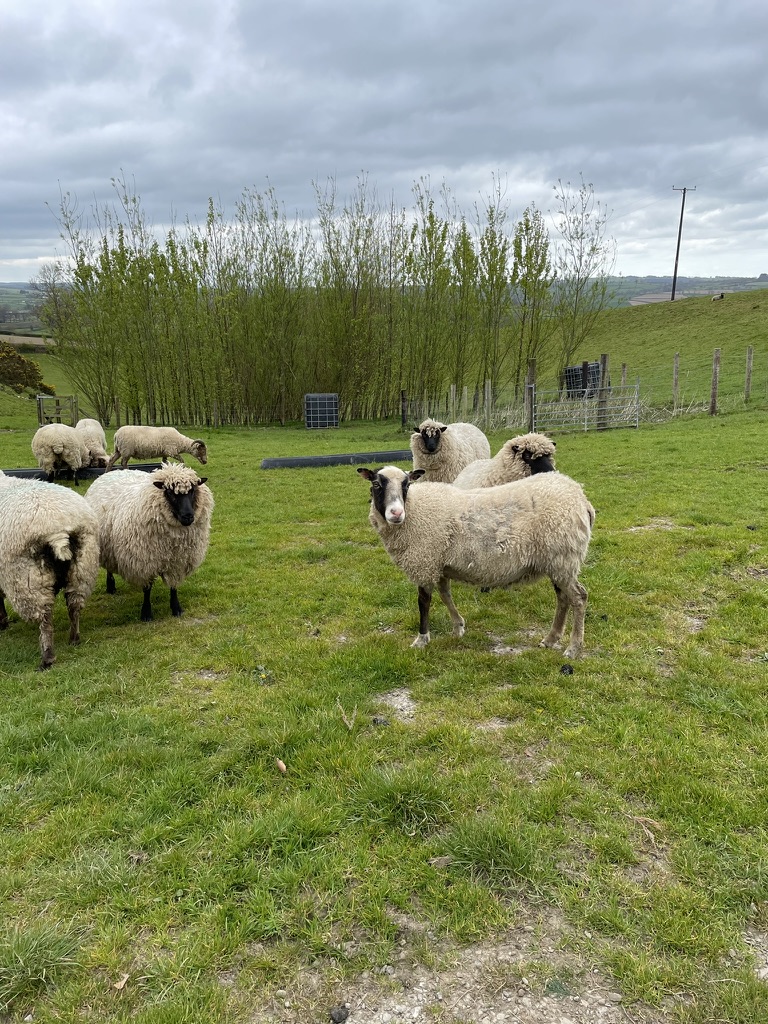
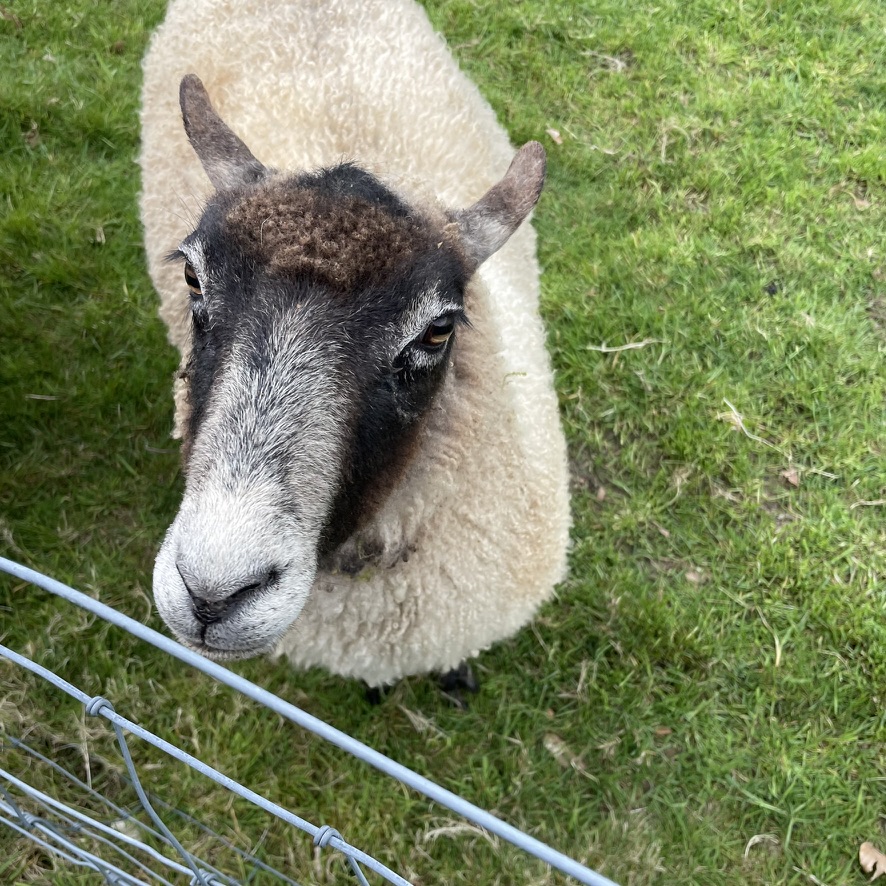
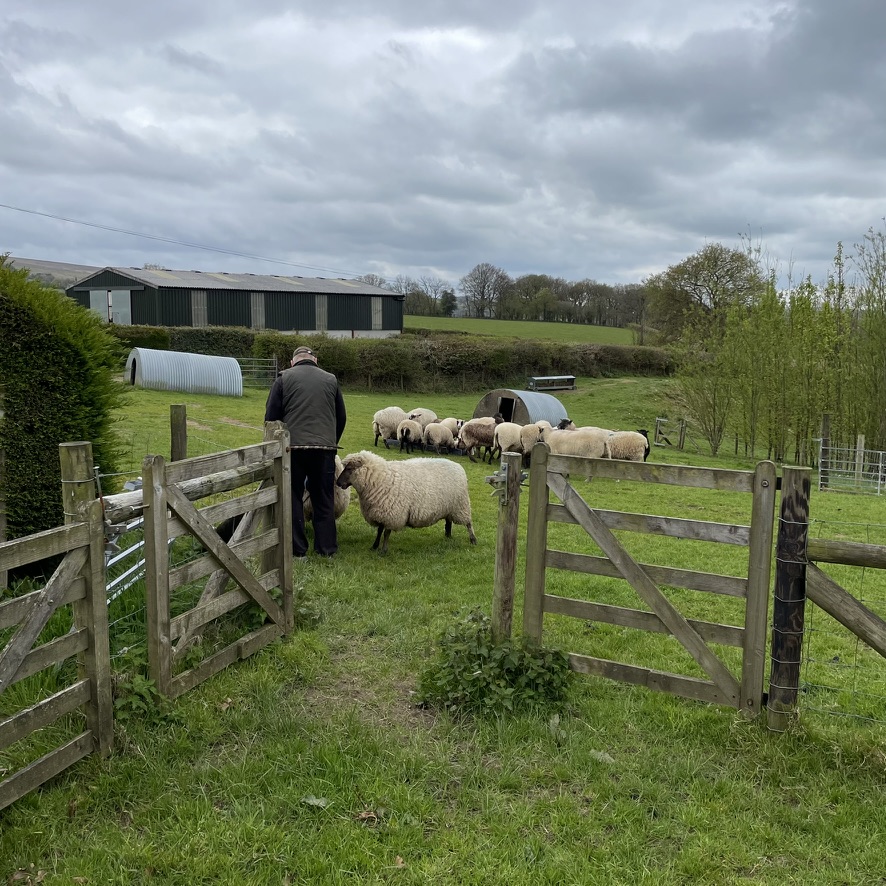
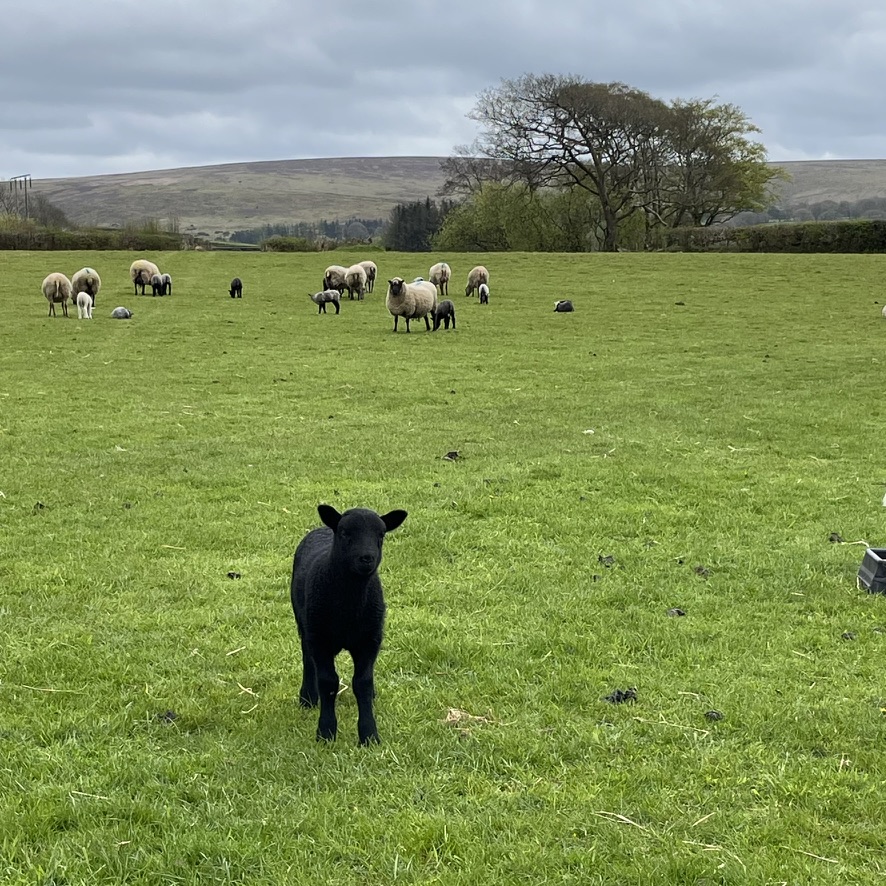
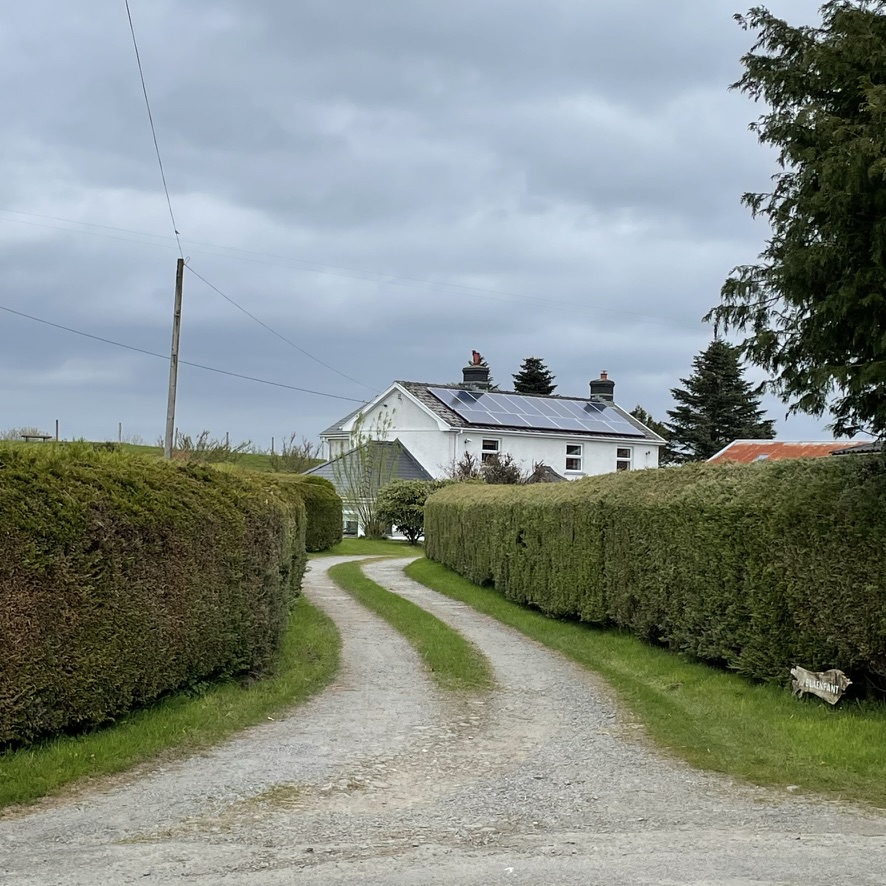
And after lunch, we were off to visit a sheep farm which keeps Llanwenog (pronounced clan-weh-nog or chhhlan-weh-nog), a rare breed of sheep local to Wales. Llanwenog joins the Lleyn, Balwen, Welsh Mule, Welsh Mountain and Black Welsh Mountain breeds as local to the area, bred to handle the very wet, cold winters. I’ve yet to see a Balwen, but managed to catch sight of all the others while here.
Why, yes, I am a sheep geek. What of it?
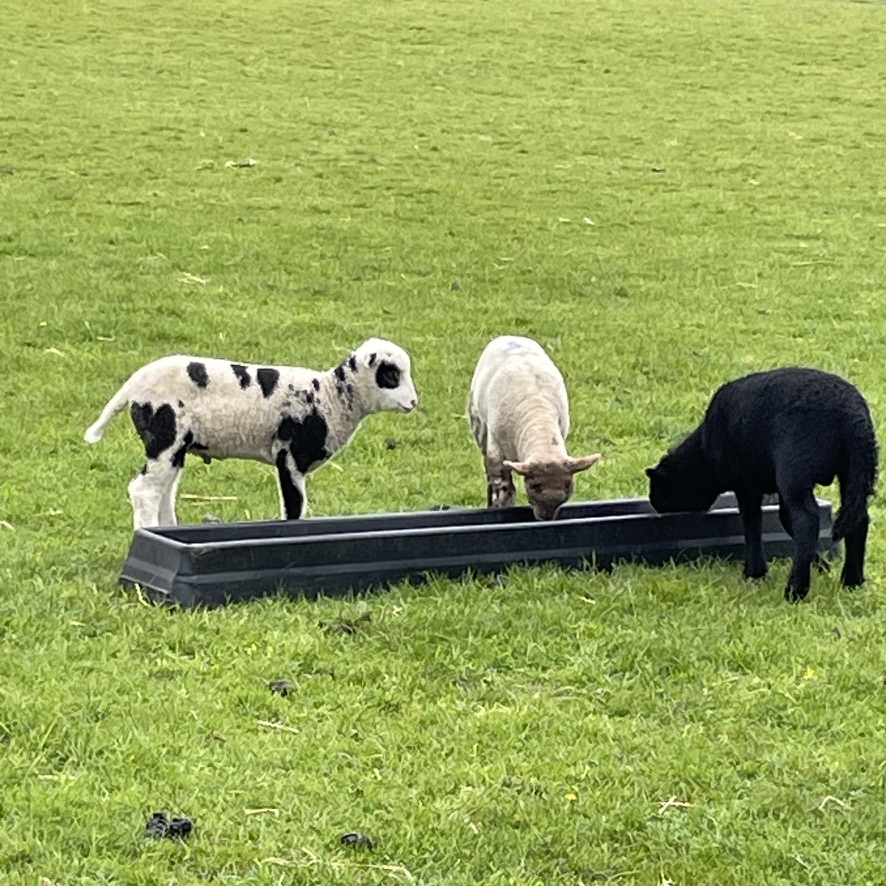
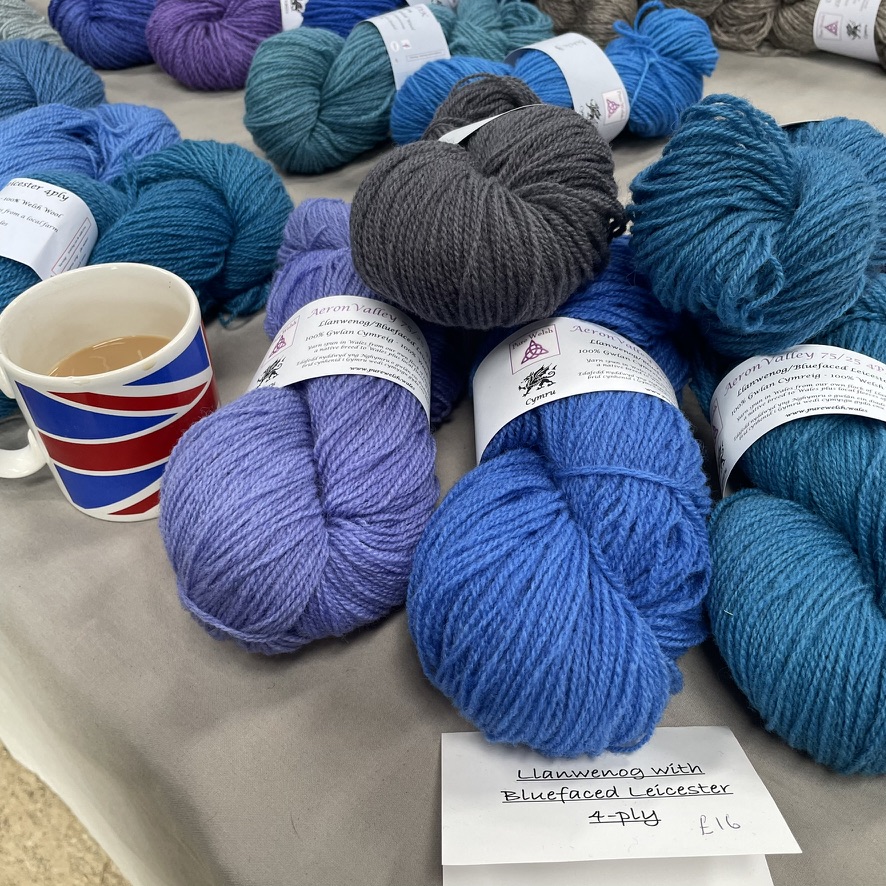
I utterly adore these Llanwenog. They are absolutely gorgeous. Handsome black faces and feet show off a really outstanding white fleece. Plus cute-as-a-button black lambs. Susanne Ullrich, their sheep keeper, blends her Llanwenog fleeces with locally sourced Bluefaced Leicester to make some amazing yarn. Strong, soft, lustrous. She also keeps Shetland and Gotland and blends those into yarn offerings as well. Heaven.
We also stopped for a visit at Strata Florida, a Cistercian abbey ruin in the area. I do love the Cistercian abbeys, most of which were destroyed by order of Henry VIII during the Protestant Reformation. When you’ve visited these sites, it’s not hard to see how communities of individuals dedicated to prayer, simplicity (austerity, even) and manual labor slowly became centers of great wealth and architectural splendor. Ripe pickings for Henry! I know, I know… he broke from the Catholic church in order to divorce Catherine of Aragon and marry Anne Boleyn, right? Hmph. Couldn’t have had anything to do with his agenda of consolidating all power and wealth of the day in the state rather than competing with Rome for it…or that he could pick up up a few million acres of land, tens of thousands of income-producing flocks and productive farms, mills, and breweries, plus the most complete scholarly collections of the day. Nah, it was probably all because he so loved Anne Boleyn.
I took exactly one picture at Strata Florida.
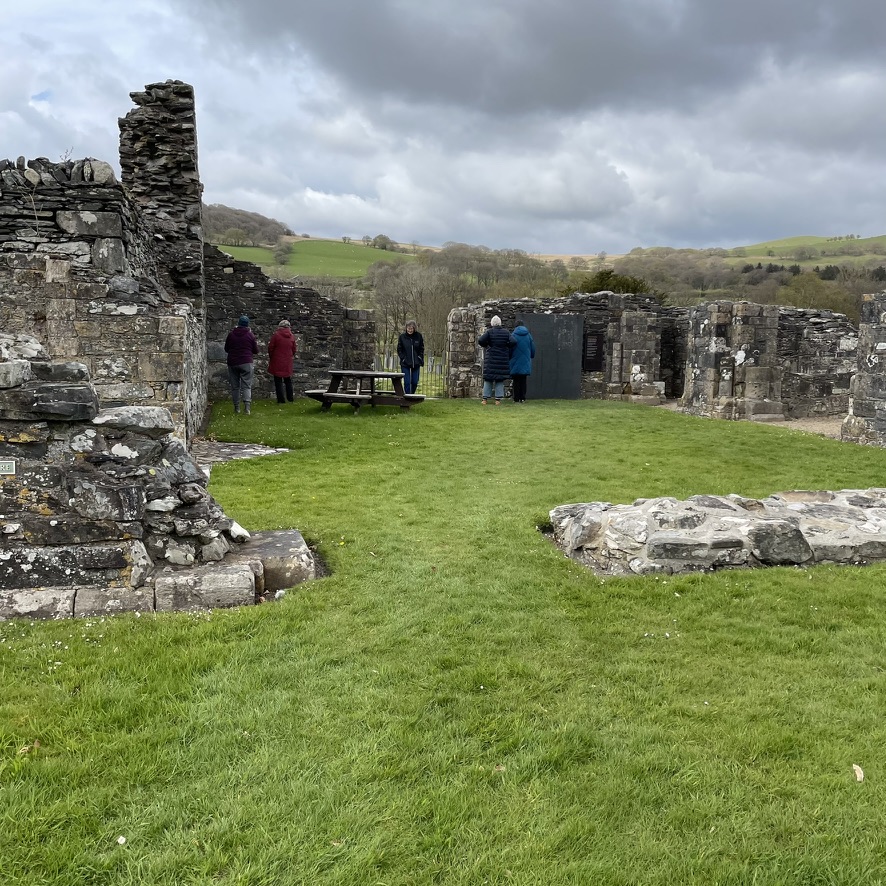
Sigh. Why so few?Two reasons. One, there’s not much left there to take pictures of. Two, I talked a bit about what the abbey and monastery would have looked like in their day, plus why they look as they do now. And there was probably a third, unacknowledged reason. Much of what we visited in Wales was not that much of a “wow” for me. I’ve seen cathedrals. I’ve visited local wool-based textile producers. I’ve been to abbey ruins. And I’ve visited coastline. So for me to take pictures depends almost entirely on either a “wow” factor or a desire to document my experiences. Several days into the tour, I wasn’t feeling much like wanting to blog about this trip. The skies were gray. The accommodation was uncomfortable for me. Our group was quickly becoming friendly and VERY happy to get to know each other and knit, laugh, explore and enjoy each other. But Wales… I just wasn’t feeling it.
What was wrong?
I couldn’t figure it out.
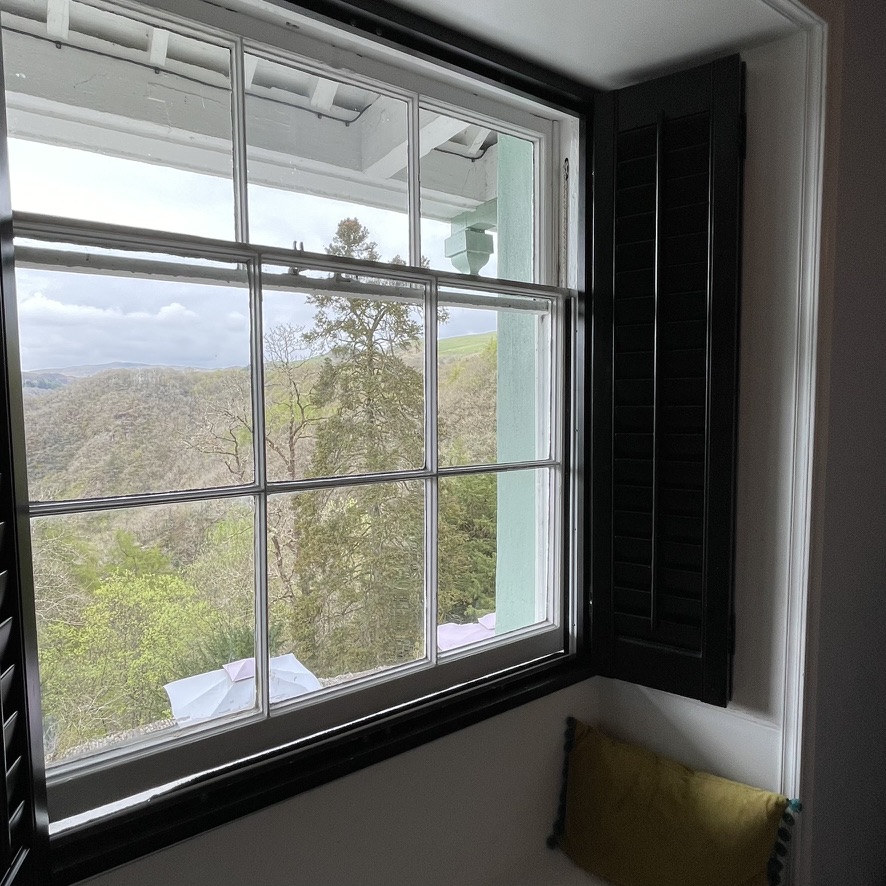
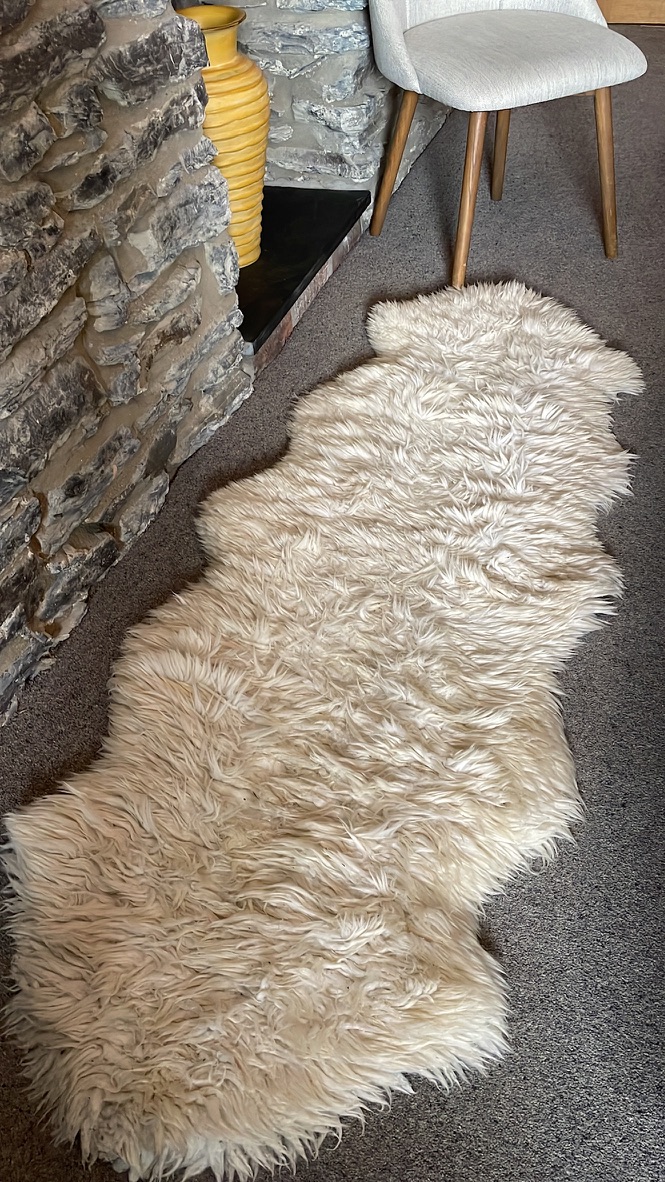
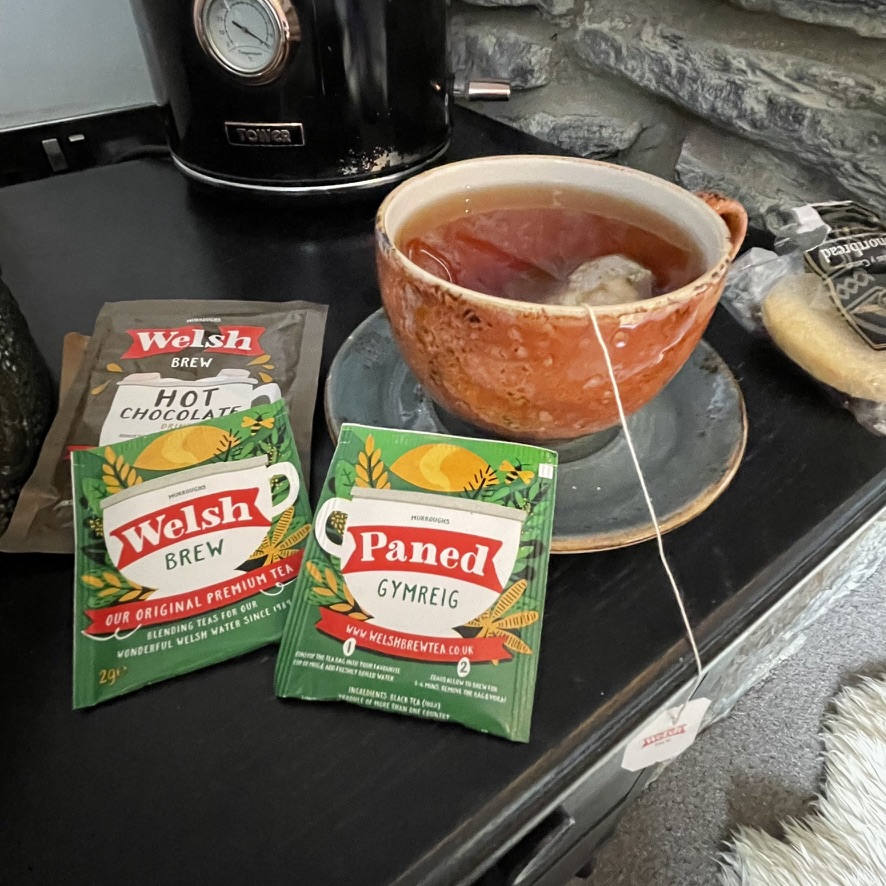
But I can tell you my mood was lifted immeasurably by arrival at our next accommodation, Hotel Hafod (pronounced “ha-vad”, as if you were saying Harvard with a snooty accent). Wow. A beautiful room looking out over beautiful landscape, a bathroom IN my room, tea and biscuits on offer, a sheepskin rug, fantastic food. Plus great food and evening knit sessions with the group that really had us laughing each night. Was my “blah” mood really due to our time at Druidstone? I’ve stayed in rustic accommodations before. It usually doesn’t bother me. Couldn’t figure it out. I made a cup of tea, went downstairs for dinner and figured that things were looking up. It’s hard to be in the midst of a wonderful adventure and realize that despite your environs and the people around you, you don’t feel wonderful. Not a comfortable state when traveling.
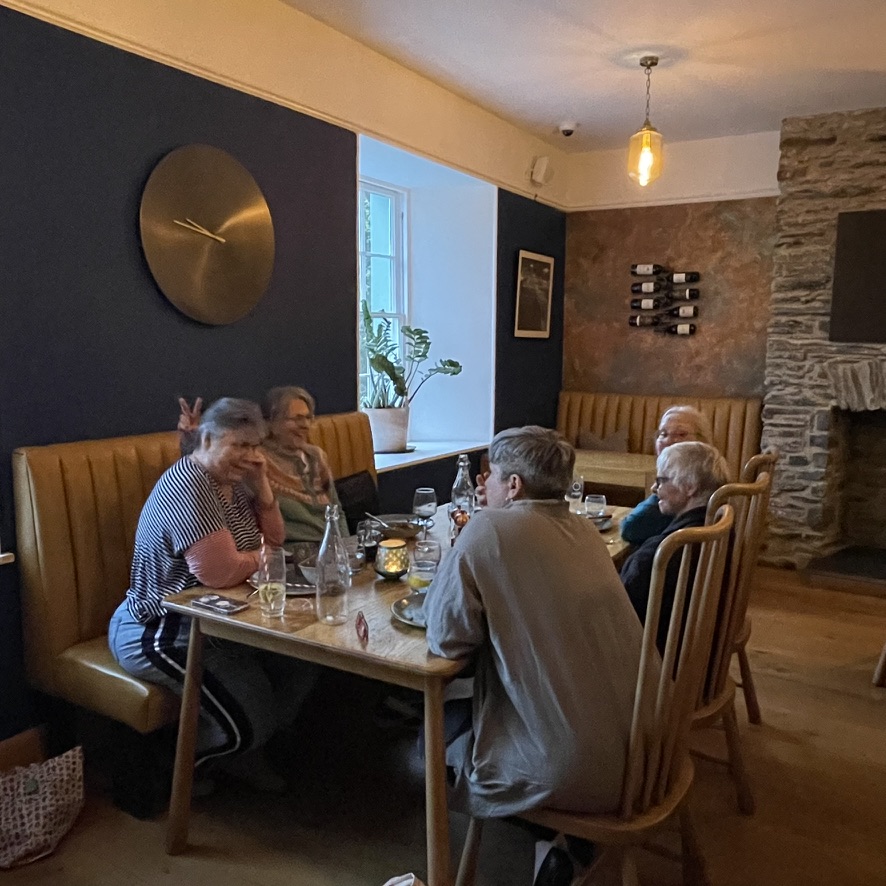
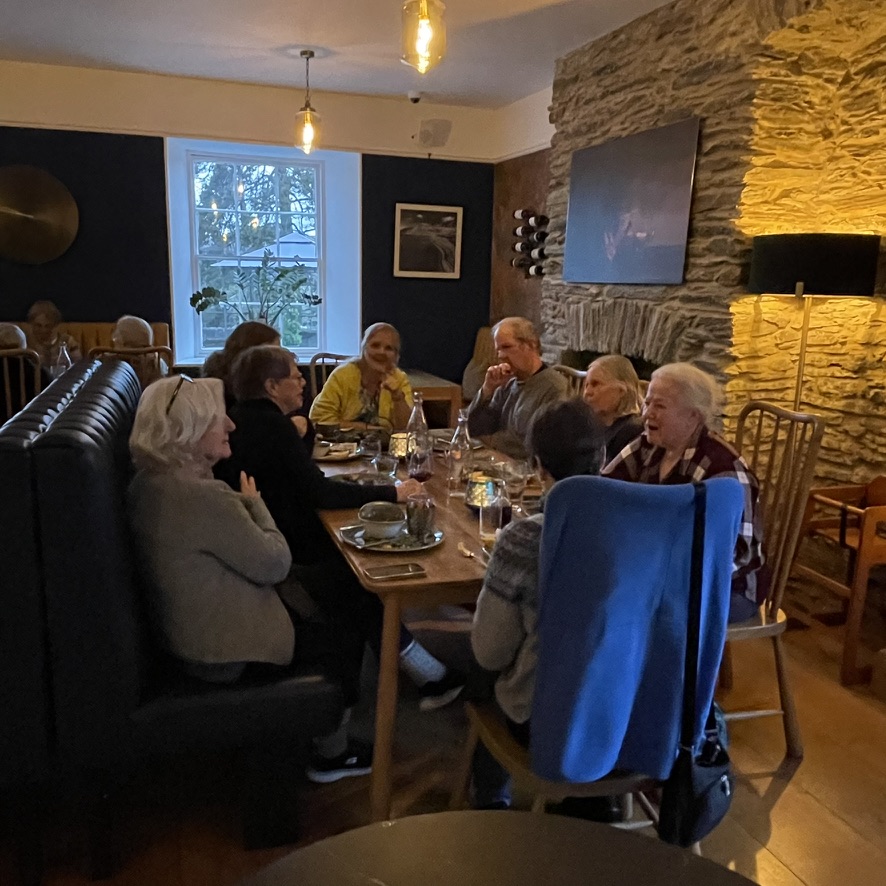
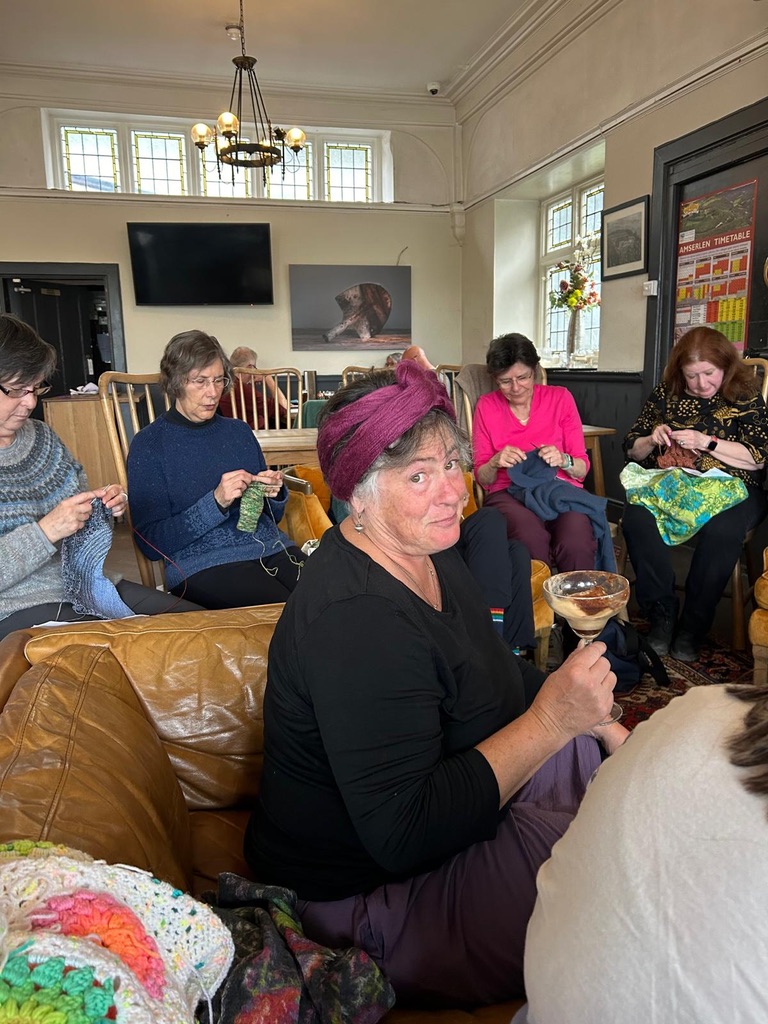
That’s me, wearing a skein of yarn on my head and having a drink instead of winding that skein into a ball. Sometimes it’s good to just relax and have a good time. You don’t ALWAYS have to be making something. And I was grateful to be among our Merry Band of Travelers (as I call them) to offset my low mood.
Tomorrow, a bridge named for the Devil. And more tongue-twisting Welsh words.


I am loving your emails and photos.
Have been thinking I would love to go to Wales because of a friend who grew up there. Now not. You saved me big dollars.
You are such an engaging writer and I love the photos so I can really see what you saw.
Can’t wait for the next one
Is Colleen your real sister?
Linda dillman in your little ole hometown.
Sent from my iPad
>
LikeLike
Hi Linda! Lovely to see you here. Collen is my coworker at Rowan Tree Travel. She was the lead guide on the Wales tour. My sister, Janet, has joined me in Yorkshire for a housesit. You’ll see her in later posts. Hope you are well. 😘
LikeLike
Glad you are now more “into” your tour. It’s lovely country.
LikeLike