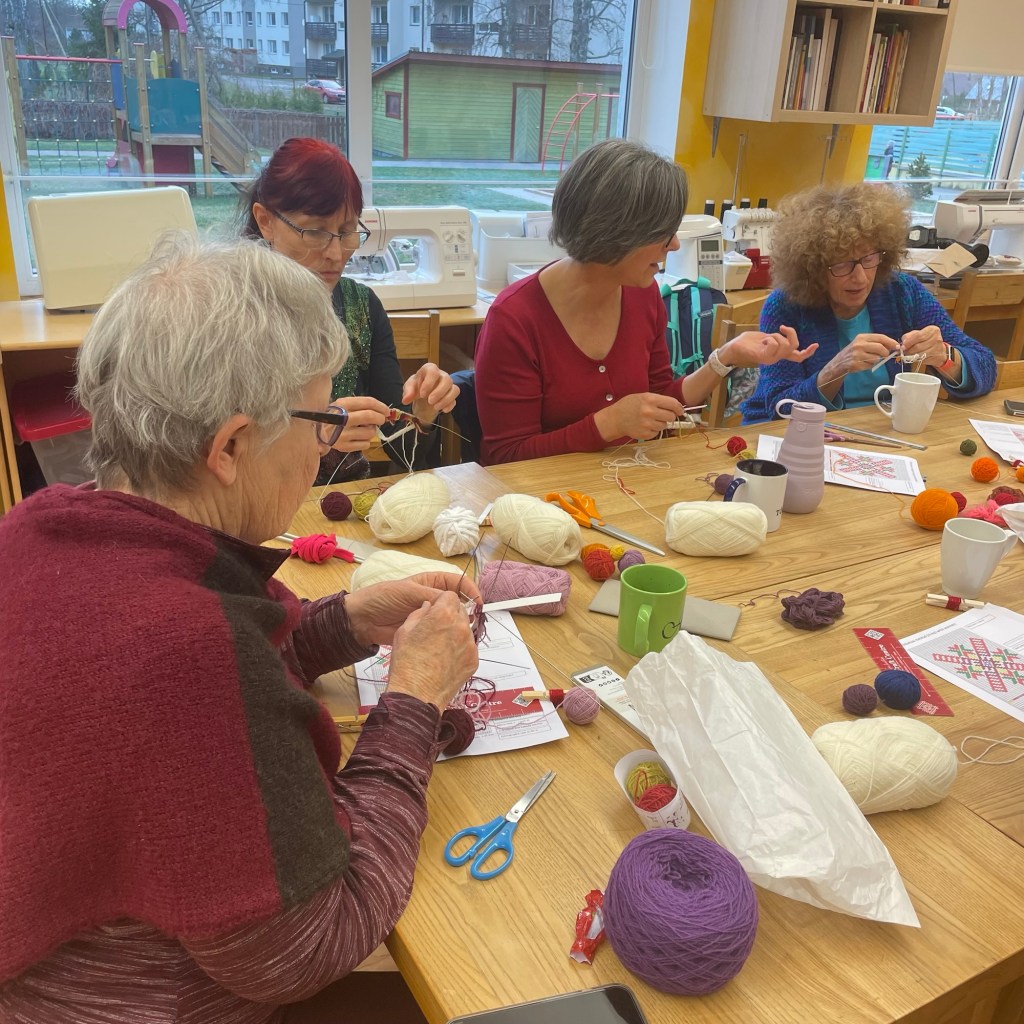
For the next five days, this group of intrepid American travelers immersed ourselves in Estonian handcrafts. We only stopped to eat. I believe I can say with absolute confidence that everyone had their fill of both textiles and food!
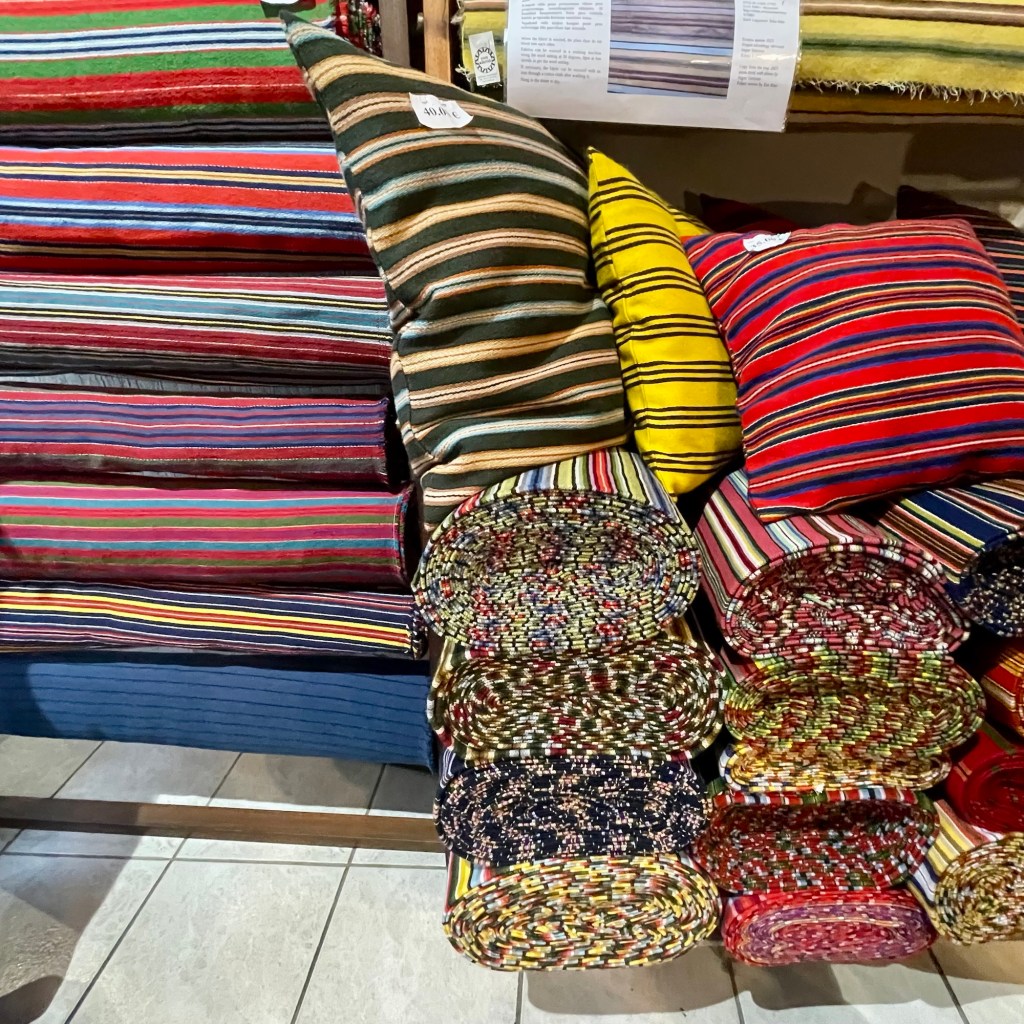
Friday, we explored offerings by Estonian artisans in Tallinn itself. As with everywhere, a visitor to the city could struggle to find locally made goodies to bring home for friends and family. The central square kiosks and tourist shops are flooded with cheap knock-offs — primarily made in and imported from the far east. I despise that aspect of global market(ing). You can bet that I and every other Rowan Tree Travel tour leader are going to get our folks to venues in which they can economically support authentic, local makers. It’s one of the reasons we do so much research and scouting ahead of offering tours to any destination
Sure enough, that was Sydney’s plan for the day.
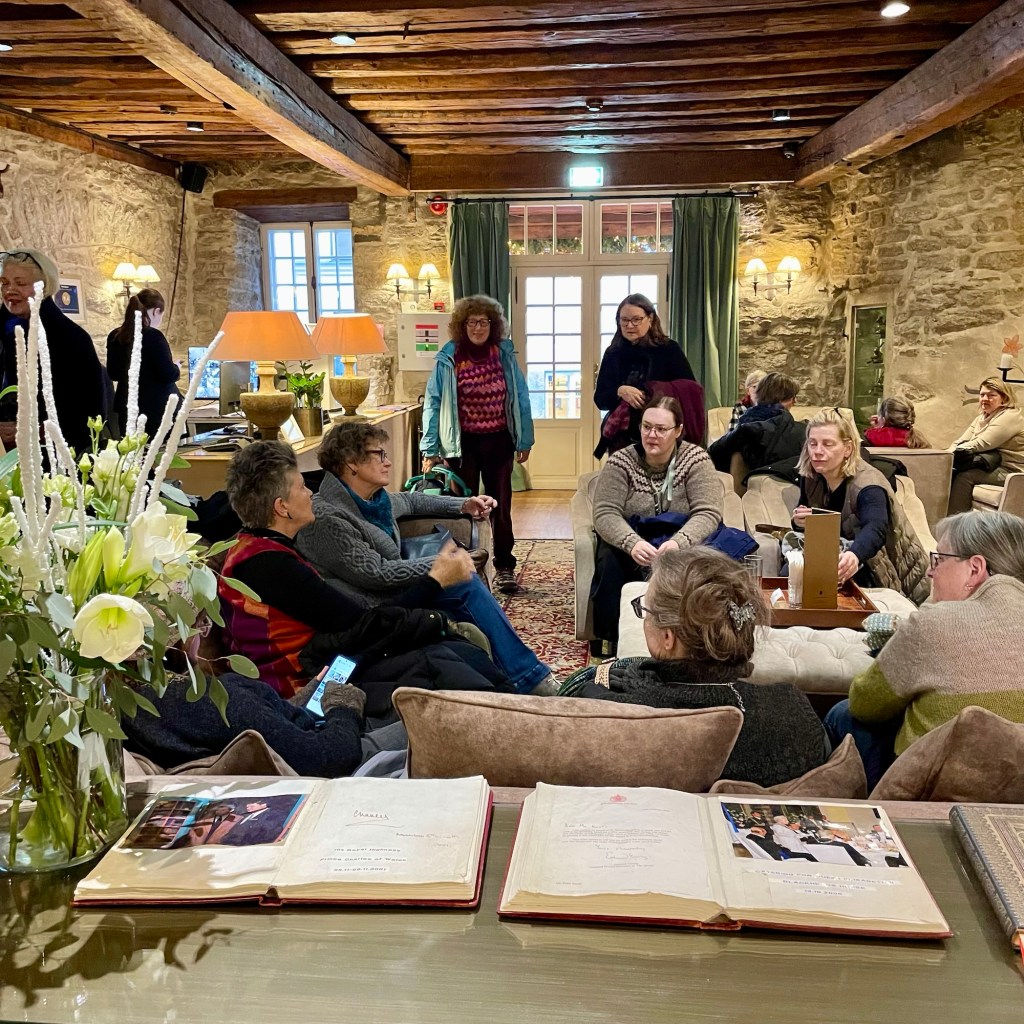
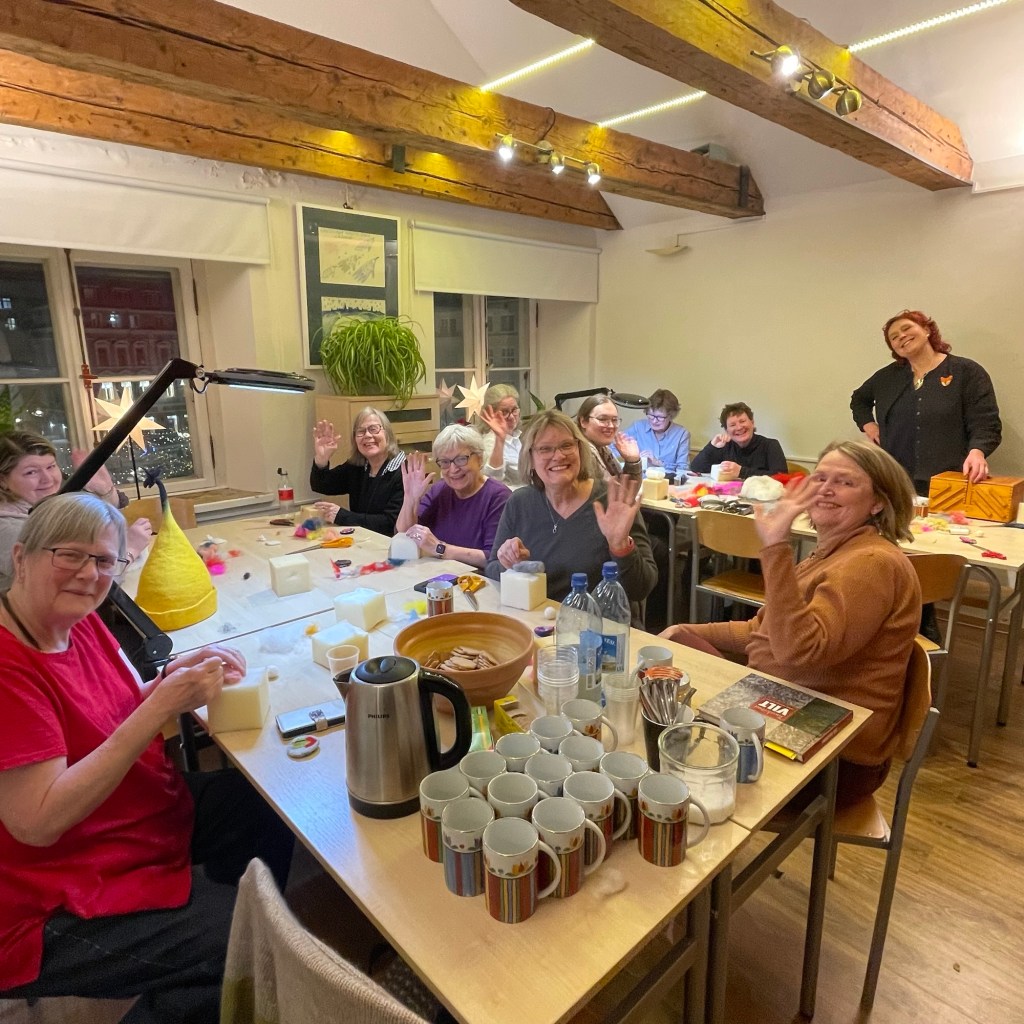
After gathering in the lobby, our group spent time at two shops where the Estonian craft cooperative showcases its goods. We also sat down in the afternoon for a hands-on workshop in needlefelting.

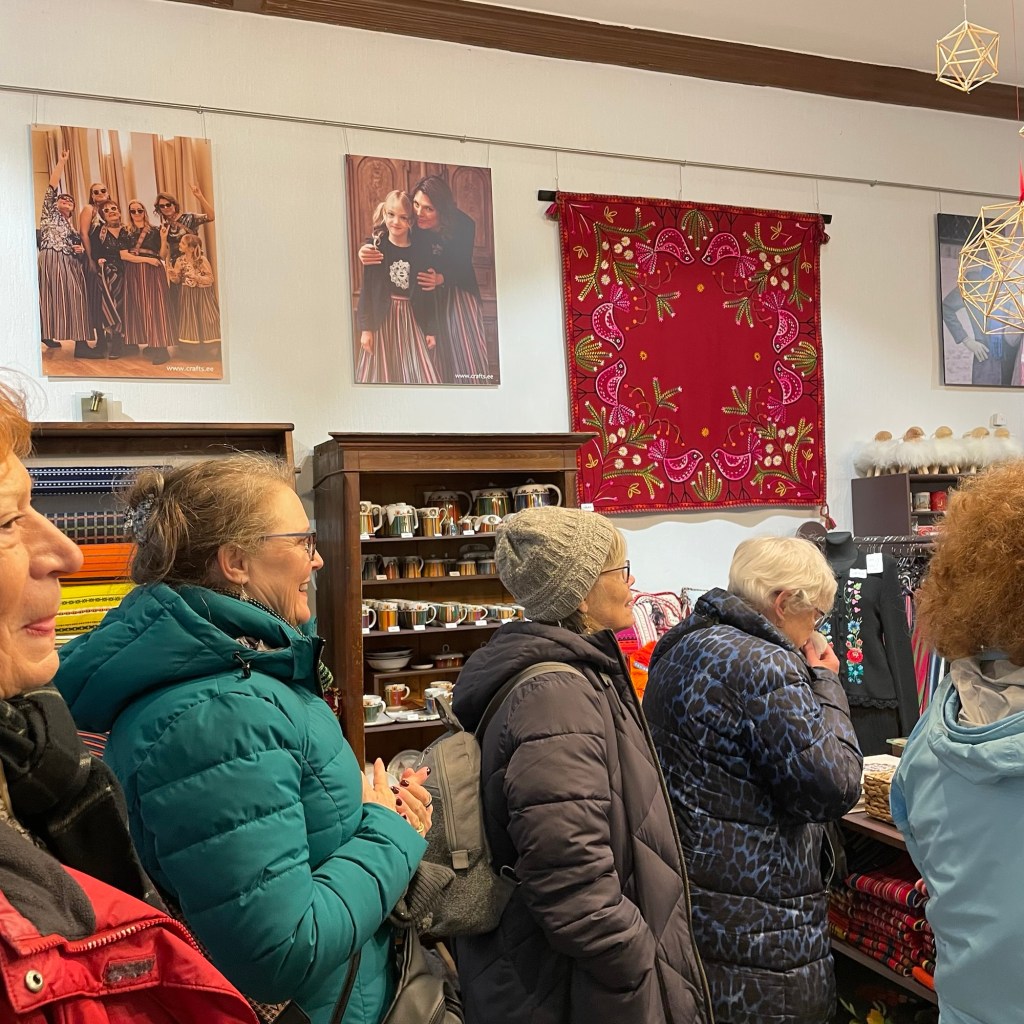
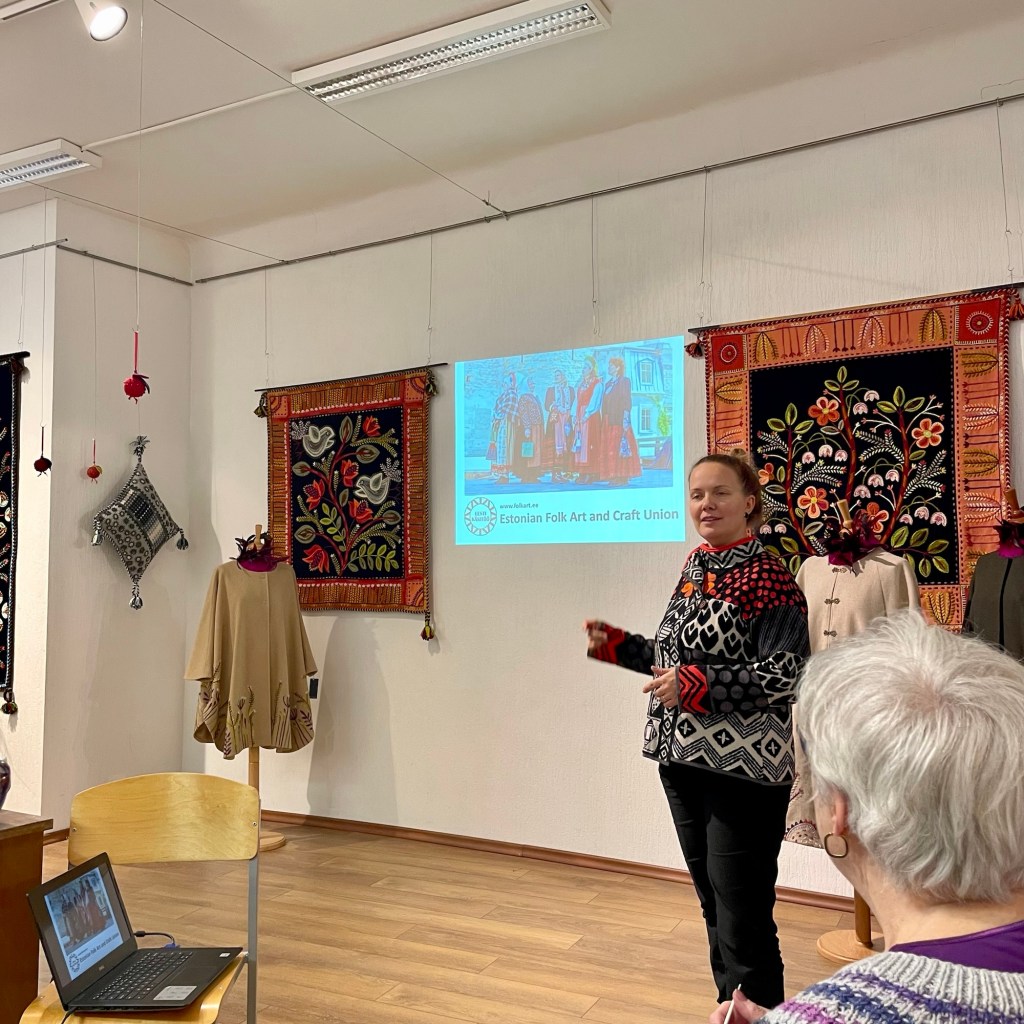

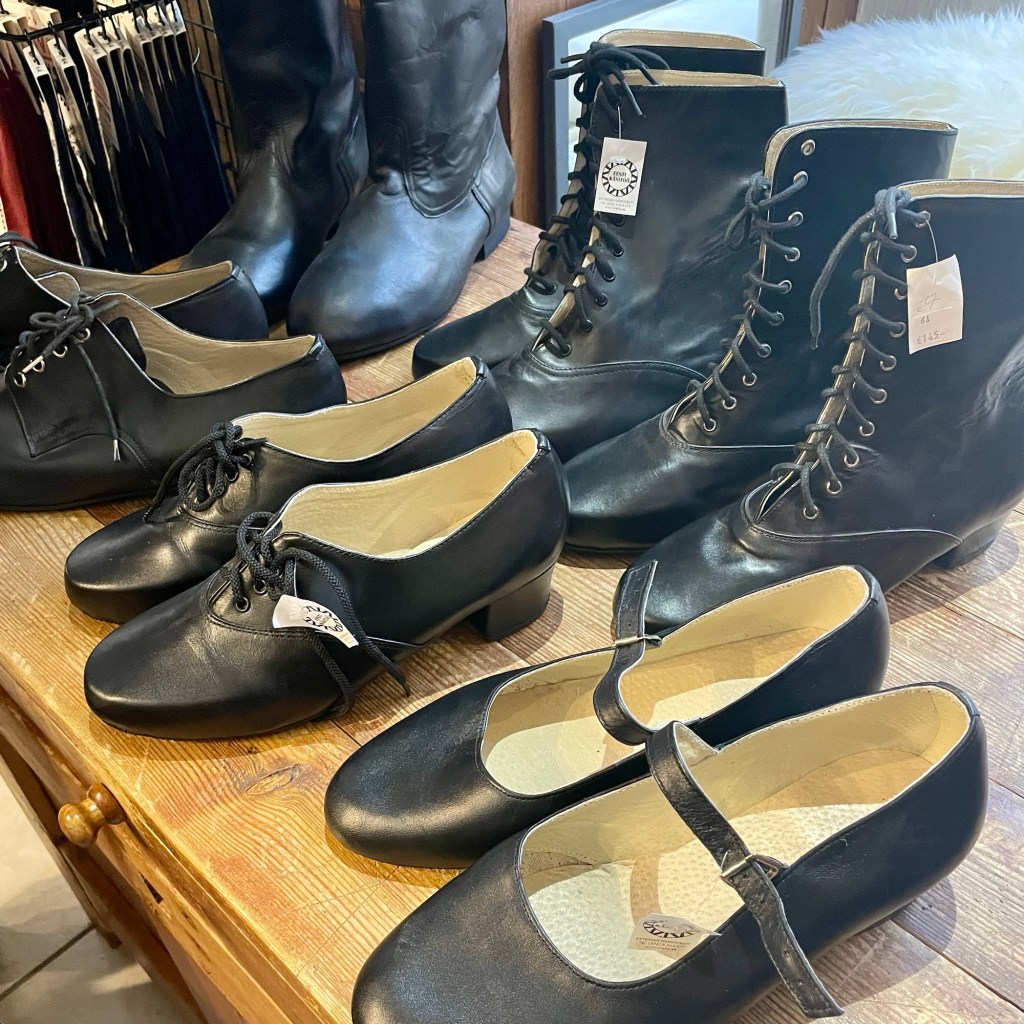

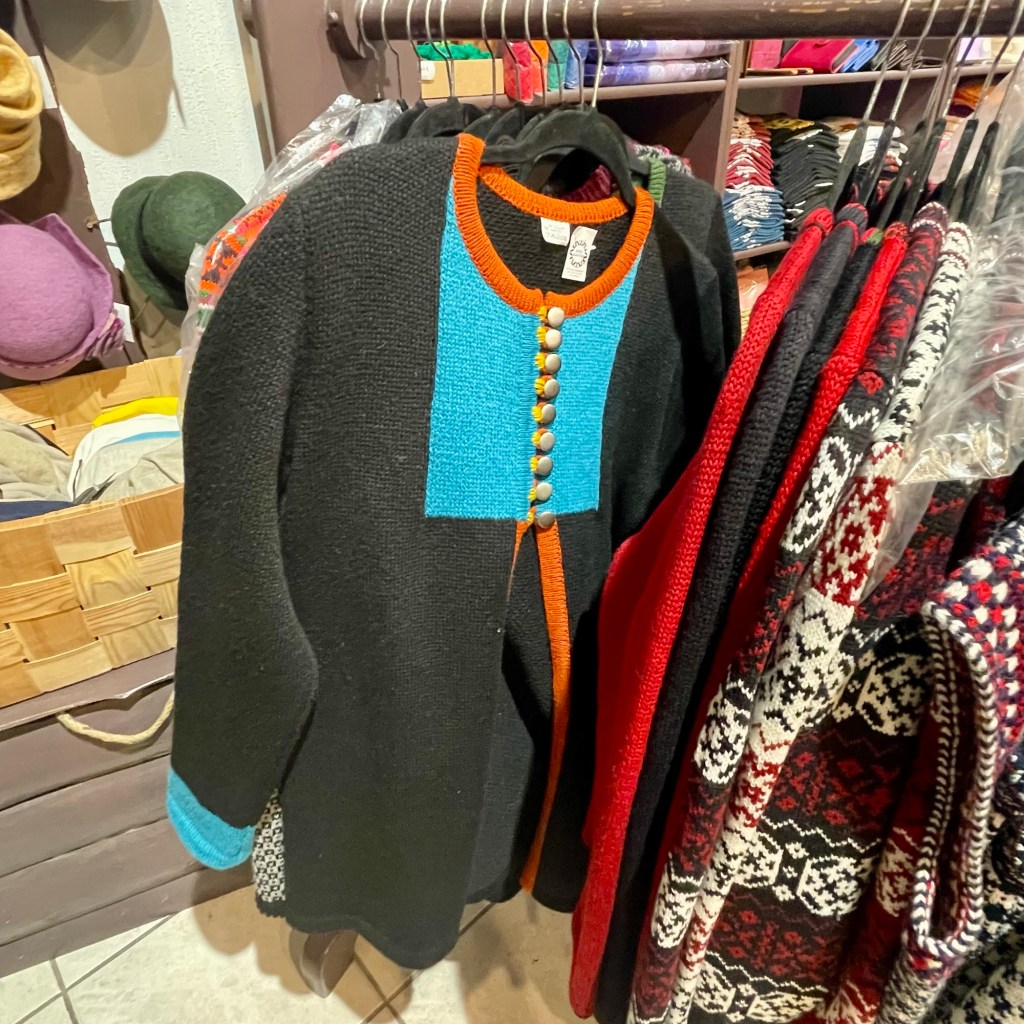
I should take a moment to explain this garment, commonly referred to as a “National Costume”. I first encountered the terminology when visiting Iceland. People there kept showing and referring this thing called a national costume. Later, when I visited the Faroe Islands, the Faroese also used these words. In each case, the term referred to very special garments made of traditional materials, highly decorated, worn only at special times and primarily made by hand.
I had no understanding of the term, so figured it was a garment used by Nordic countries that must be related to national identity. The closest analogy I had was from the cultures in my hometown: the ceremonial dress of Native American communities and the traditional dress of Spanish-Colonial folklorico.
Indeed, it is similar.
Here is the wikipedia definition of national costume:
Folk costume, traditional dress, traditional attire or folk attire, is clothing associated with a particular ethnic group, nation or region, and is an expression of cultural, religious or national identity. If the clothing is that of an ethnic group, it may also be called ethnic clothing or ethnic dress. Traditional clothing often has two forms: everyday wear, and formal wear. The word “costume” in this context is sometimes considered pejorative, as the word has more than one meaning, and thus “clothing”, “dress”, “attire” or “regalia” can be substituted without offense.[1][2][3][4]
.jpg)
.jpg)


From top, left to right: Filipinos (Igorot), Kenyans, Ukrainians and Peruviansdressed in traditional garments
Following the rise of romantic nationalism[5] in parts of Europe, pre-industrial peasantry came to serve as models for all that appeared genuine and desirable. Garments that evoke peasant dress were made from traditional pre-industrial textiles.
In areas where Western styles of dresshave become typical, traditional garments are often worn during special events or celebrations, particularly those connected to cultural tradition or heritage.
So, indeed, Iceland, the Faroe Islands and Estonia — plus many, many more countries and individual ethnic groups— have this tradition of a national, or folk, costume.
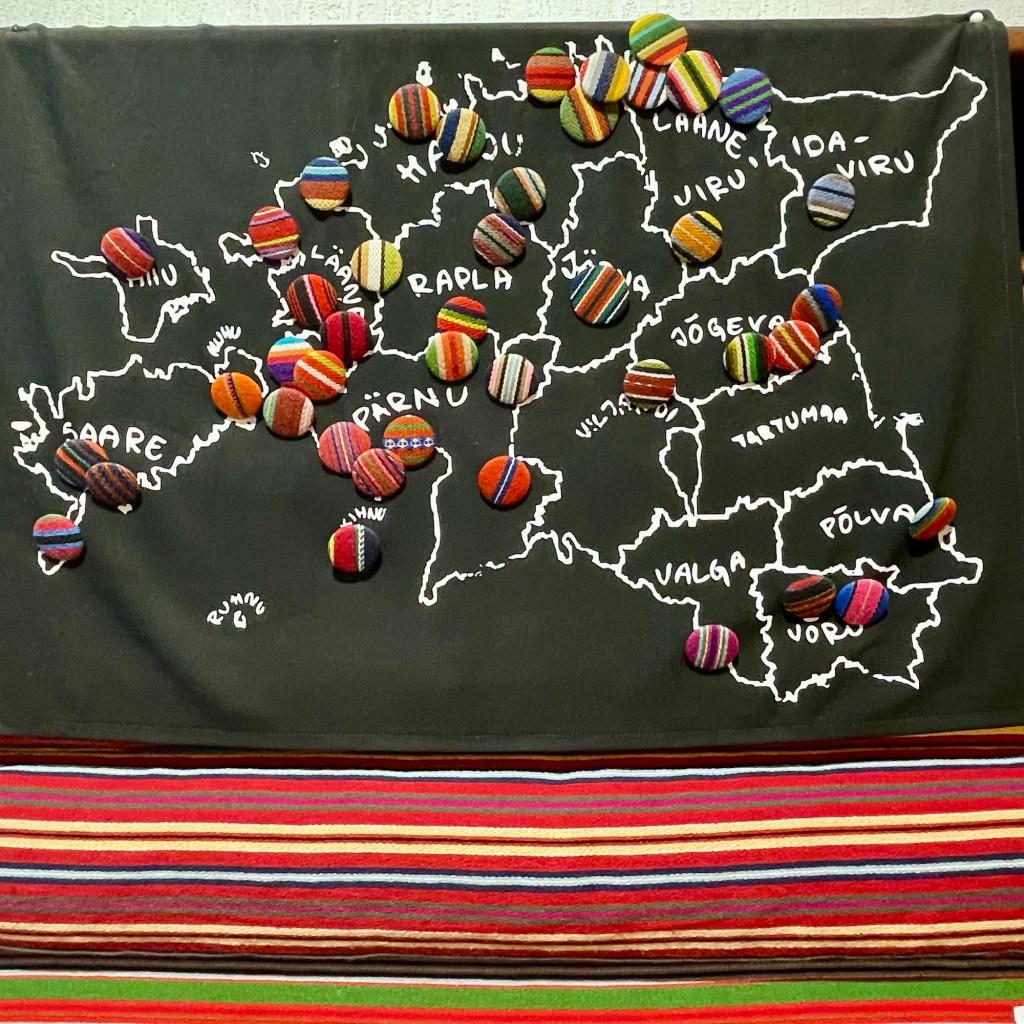
We soon learned that Estonian national costumes are varied by region (according to the textile map shown above). They are deeply interwoven with Estonian national identity. “In Soviet times” (the years between 1940 and 1991, during which Russia annexed the Baltic states of Estonia, Latvia and Lithuania), the wearing of such garments was deeply frowned upon. At certain times, forbidden. So the creation, care of and wearing of the Estonian national costume is a very big deal. Not many people living now have the skills needed to make one. Within the past decade, courses have been developed in Estonia to disseminate what knowledge remains. People sign up for the classes and over the course of one to three years, gain the skills necessary to painstakingly make every piece of a national costumes for themselves or a loved one. You’ll see a sample of this coursework later, during our time in the village of Tostamaa.
So, as I refer to traditional or national costume, I am referring to this set of garments made by hand and worn for special occasions. Contemporary garments may utilize elements, motifs or materials taken from these folk garments. But then they also incorporate either modern materials, cuts or styles to make them more amenable for everyday use.
The whole subject is fascinating.
Anyway, both national costumes and contemporary garments were on display in Tallinn.
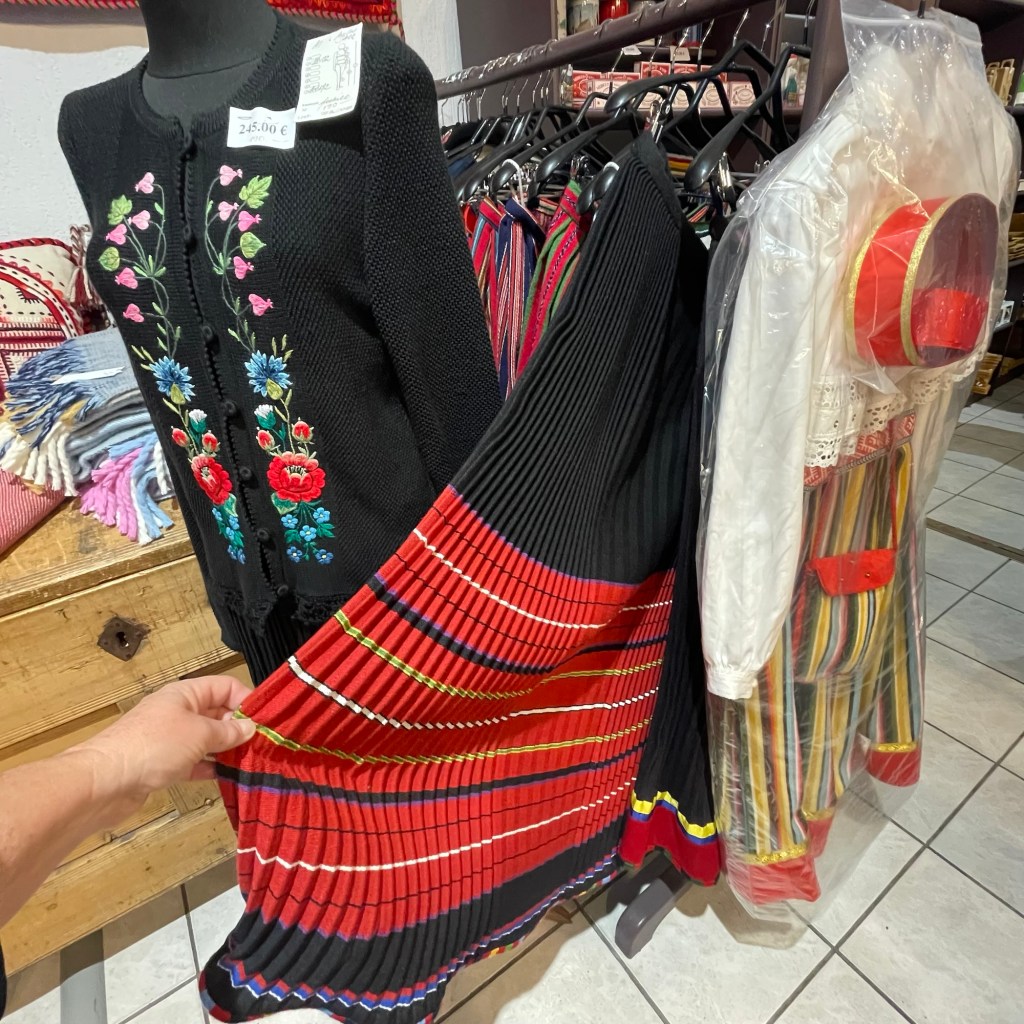
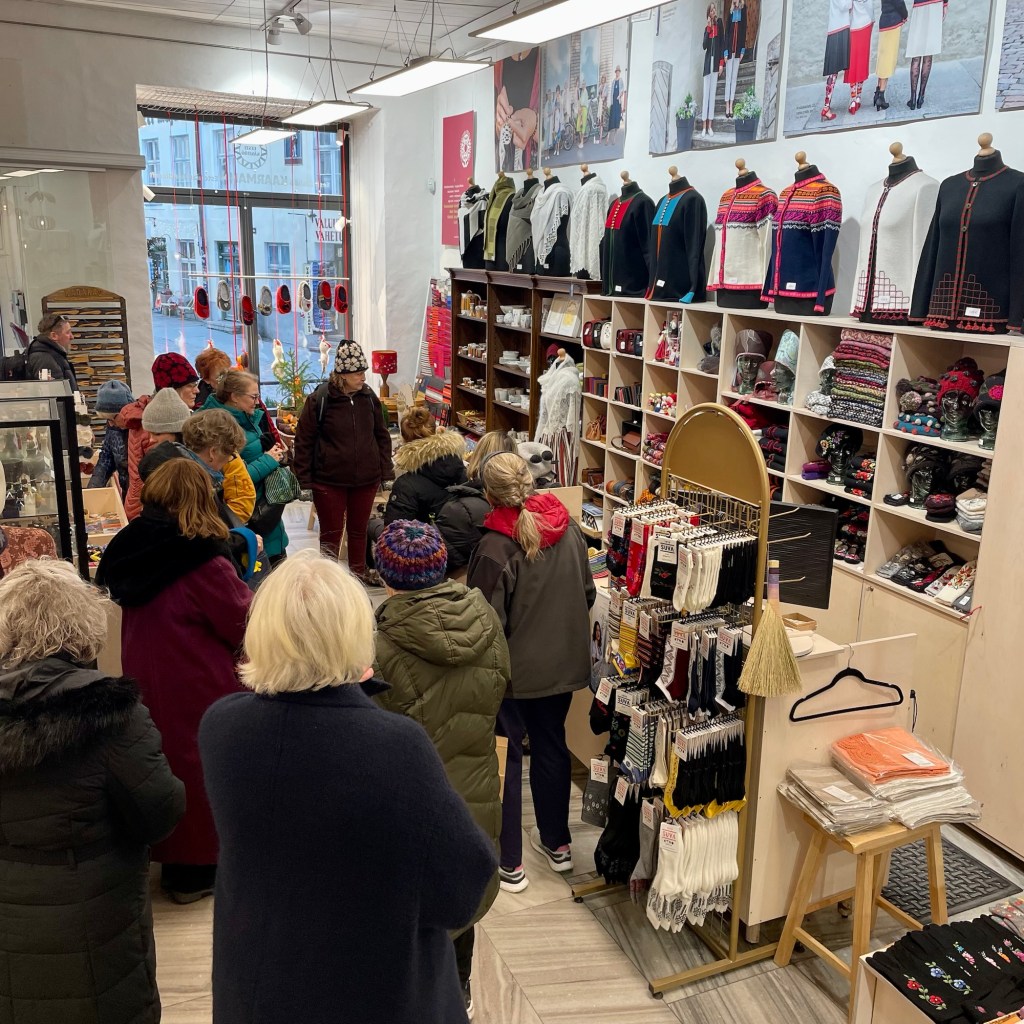
And our time with felting instructor, Leena:
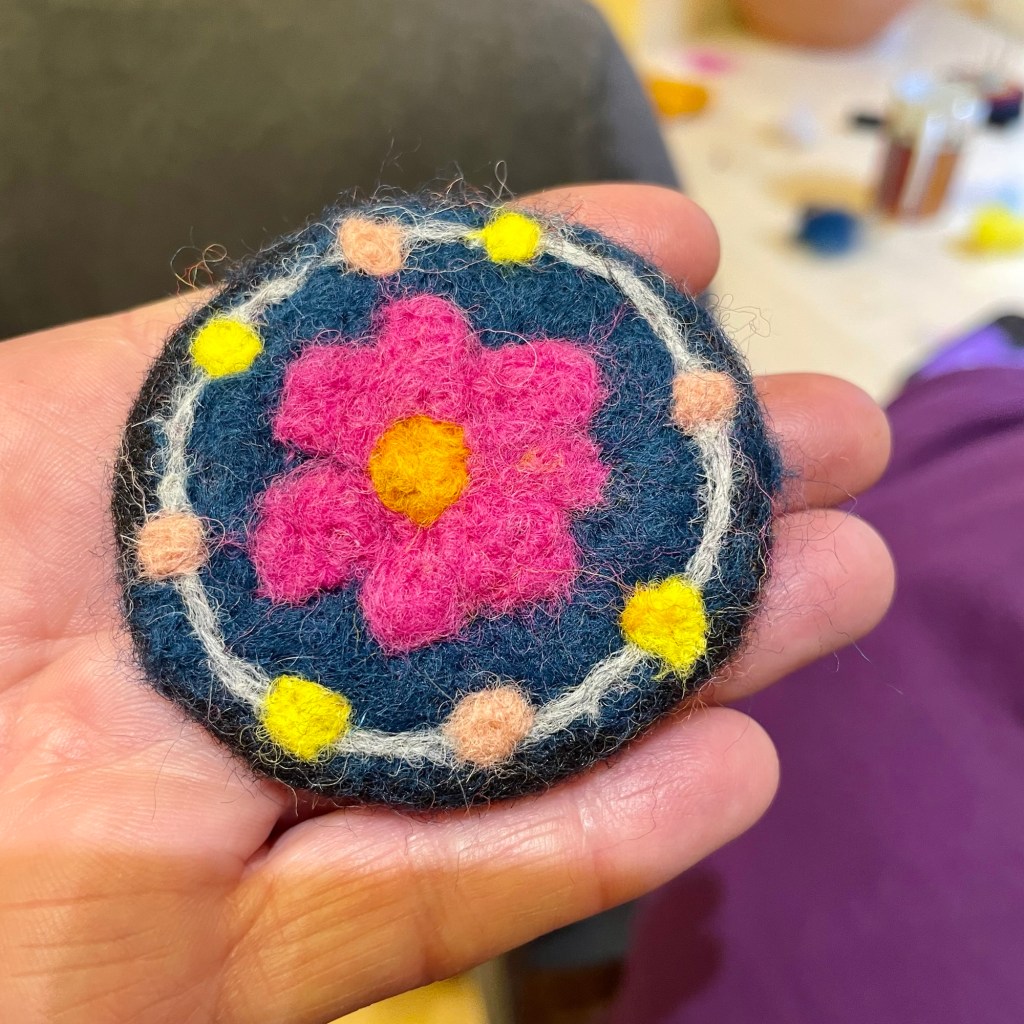
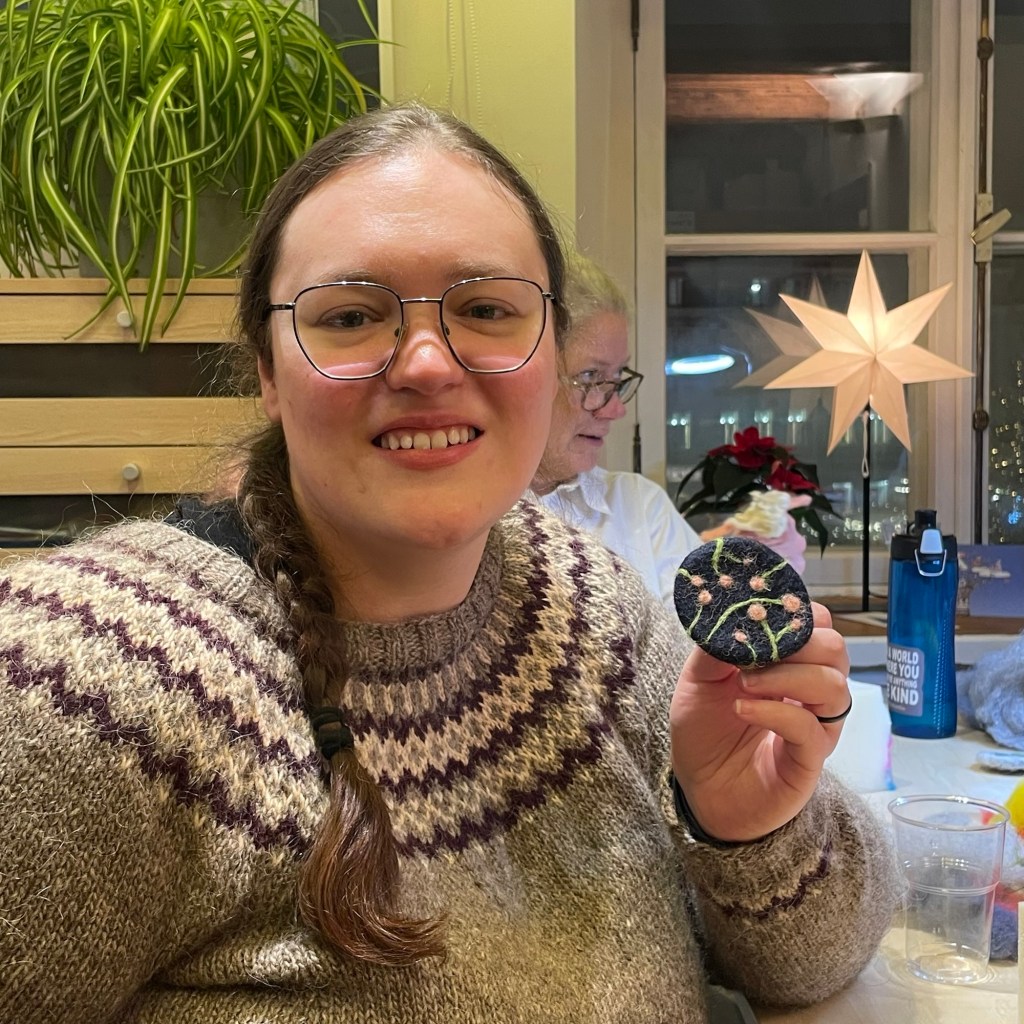
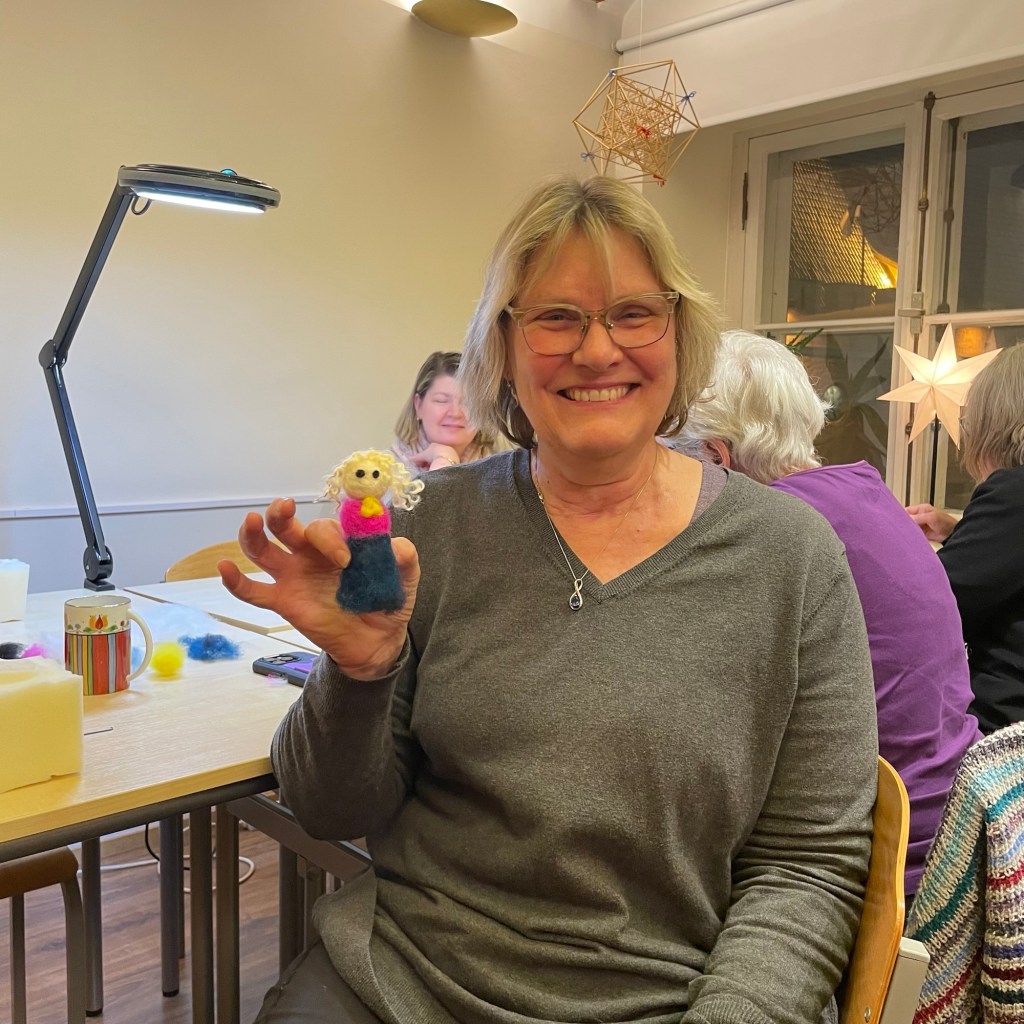
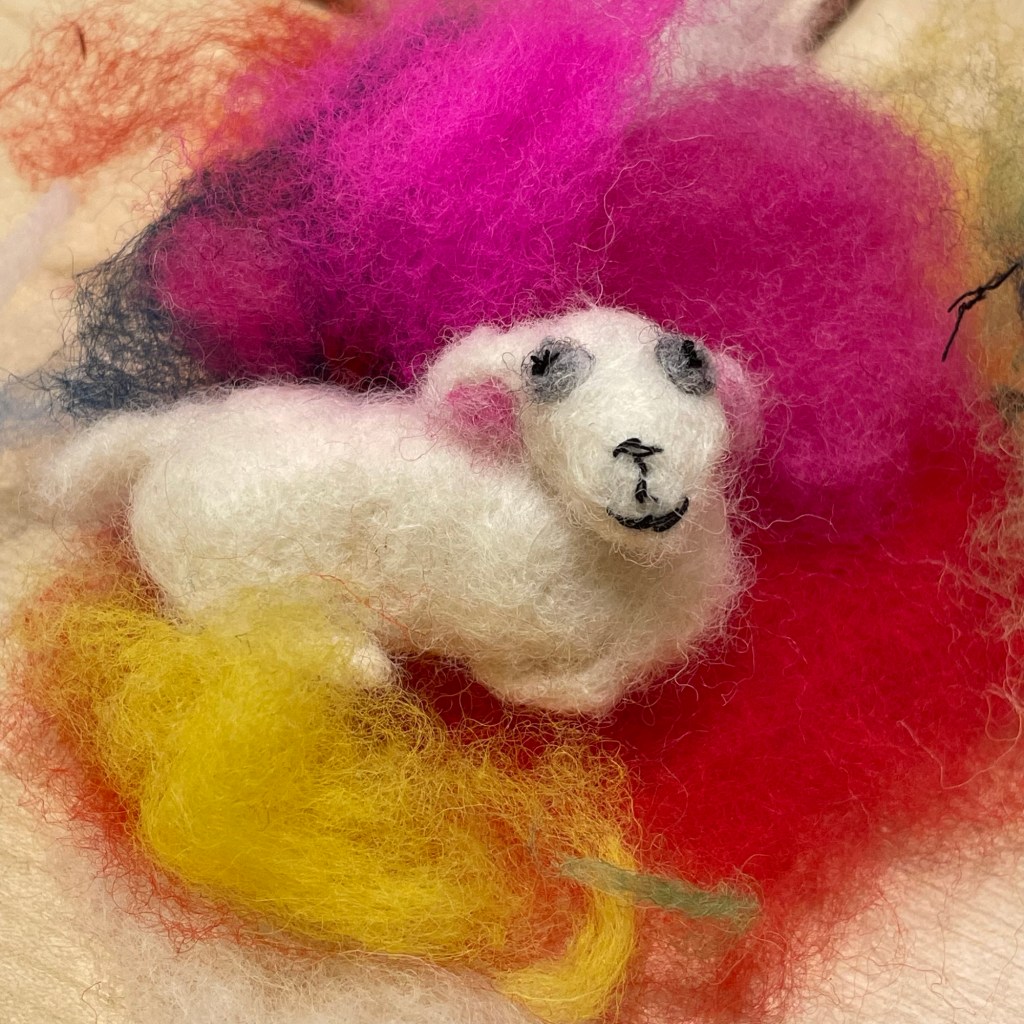
Note: While writing this post, I’ve been at the rooftop restaurant of my Barcelona hotel. It’s about 60 degrees and sunny. Also this fellow is giving me the eye because I have a drink and snacks.
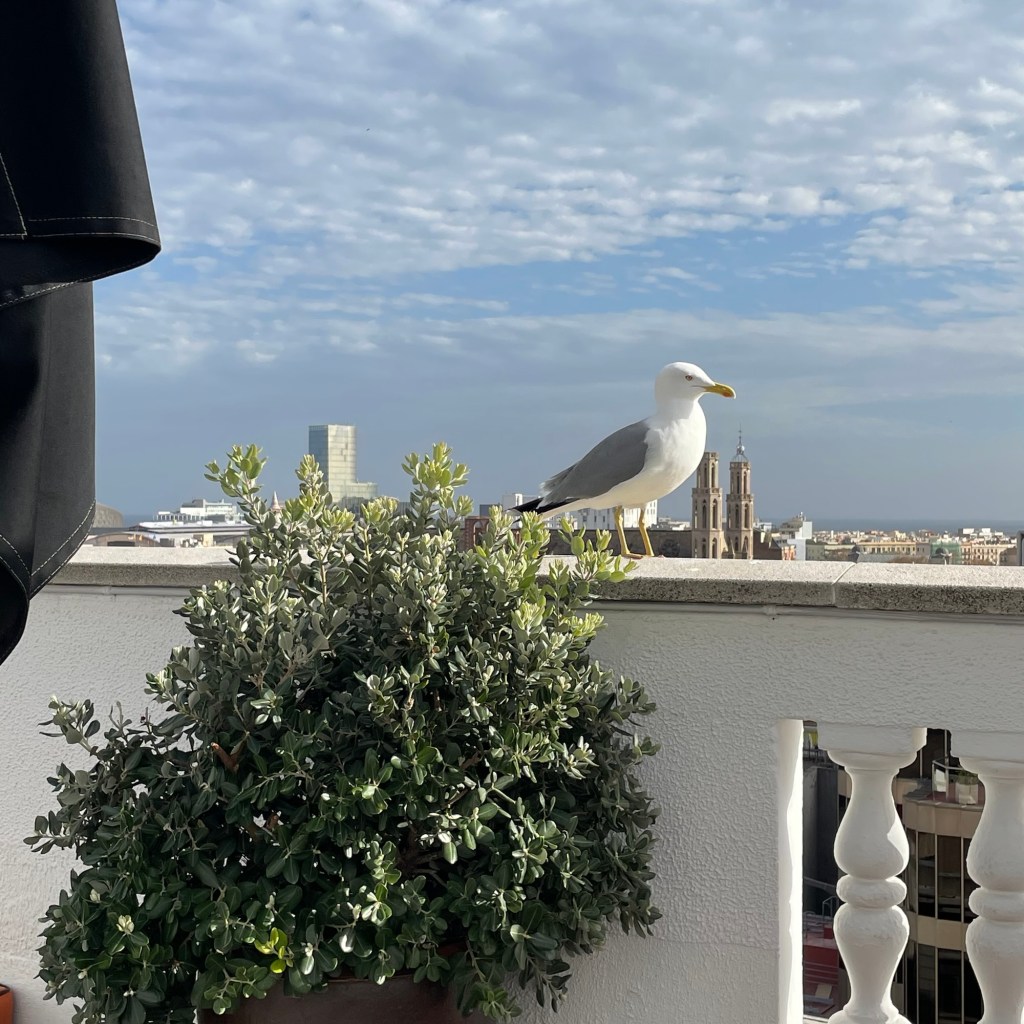
I can tell you there’s about a thirty degree difference between where I am now (Spain) and where I’m writing about (Estonia). Lest you think we were exploring Estonian handcrafts in the sun, I’ll give you a picture of the predominant weather:
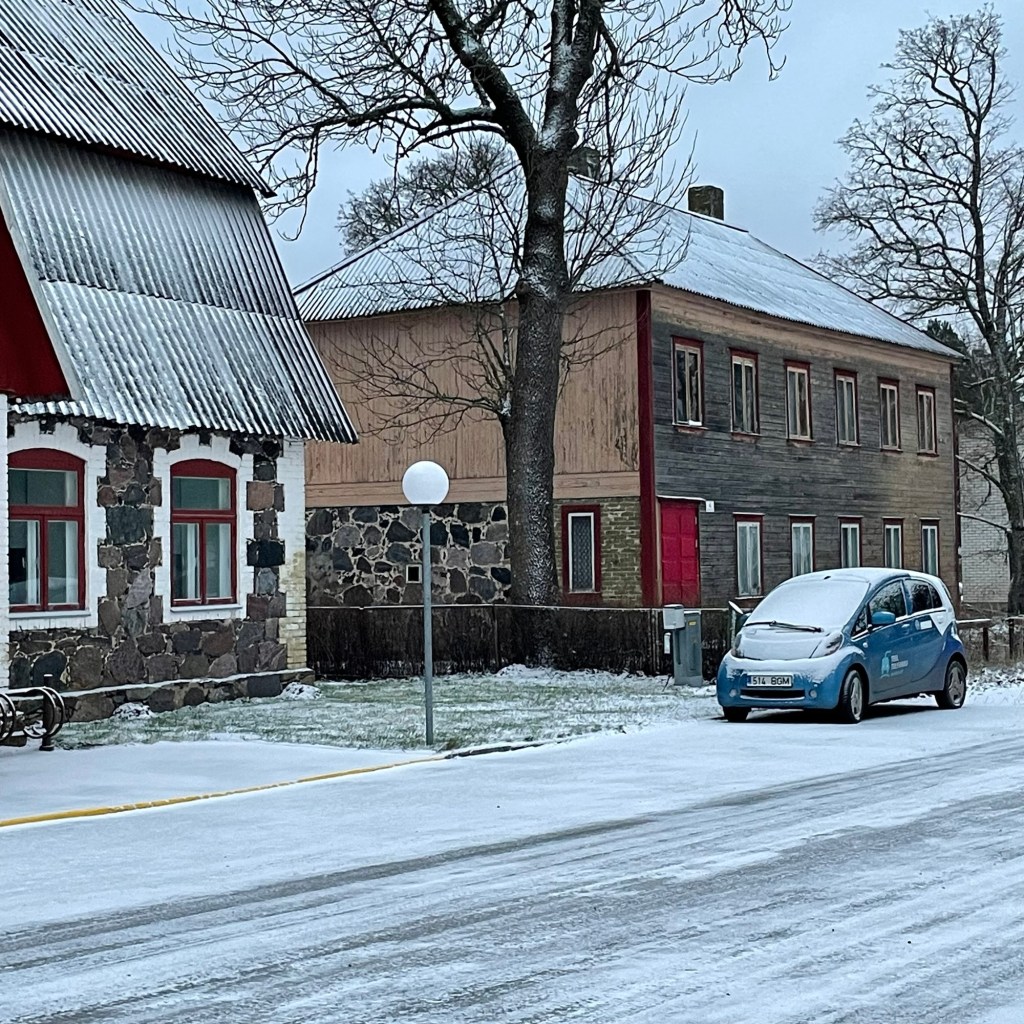
Also, sunrise was at about 9 am ish and sunset around 3:30 pm. Short days. But bright with textiles, learning and good cheer!
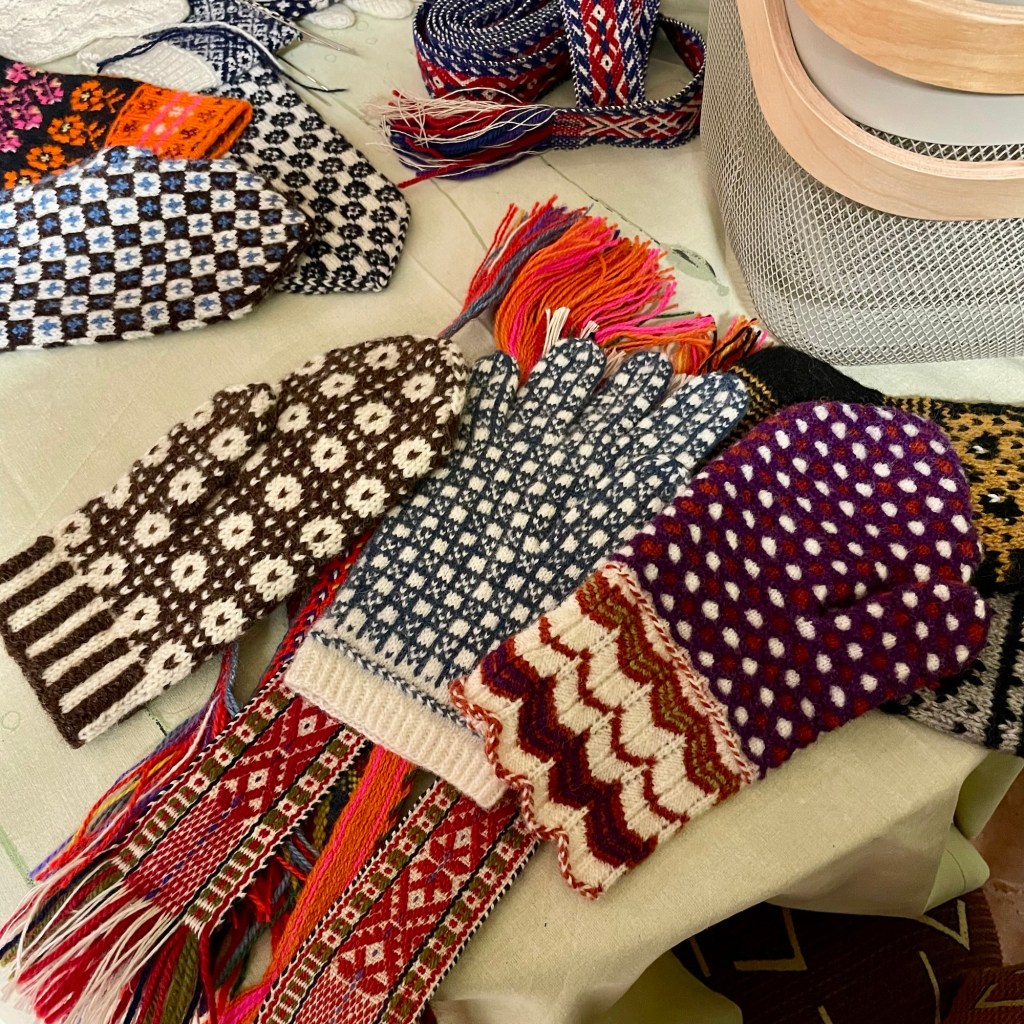
More to come…
 Studio Briddsang
Gorgeous colors and patterns! I hope you bought yourself some clothing!
LikeLike
I may have purchased a few items…
LikeLiked by 1 person
Love, love all the colts and patterning. The pleats in the skirt remind me of the one I have from the yearly International Foll Art market here in town.💕😞
LikeLike
I forgot to comment on those teeny tiny needles in your last post. I can’t even imagine since I can barely manage with needles for an average scores, which I make poorly anyway.
I looked carefully at that map of the regional weavings in Estonia. Some of them remind me so much of Guatemalan fabrics!
LikeLike
The colors and intricacy of the work also reminds me of textile work from Mexico and Central America. Hard to think of those bright colors as European!
LikeLiked by 1 person
Perhaps because color is missing so much of the year between the amount of winter and gray.
LikeLike